Is Your Pet’s Shedding Normal? Warning Signs Every Owner Should Know
Most pet shedding is completely normal. It follows a biological cycle driven by daylight hours, and for the majority of dogs and cats it happens in predictable seasonal patterns – heavier in spring, lighter in fall, quieter in winter.
Abnormal shedding looks different. It appears in patches. It happens outside of seasonal patterns. It comes with skin changes, behavioral shifts, or other symptoms that normal shedding does not produce. Knowing the difference between the two is what this guide is about.
If your pet is losing fur in circular patches, showing bald spots, scratching constantly at one area, or shedding heavily with no seasonal explanation – those are the warning signs worth paying attention to.
What Normal Shedding Actually Looks Like
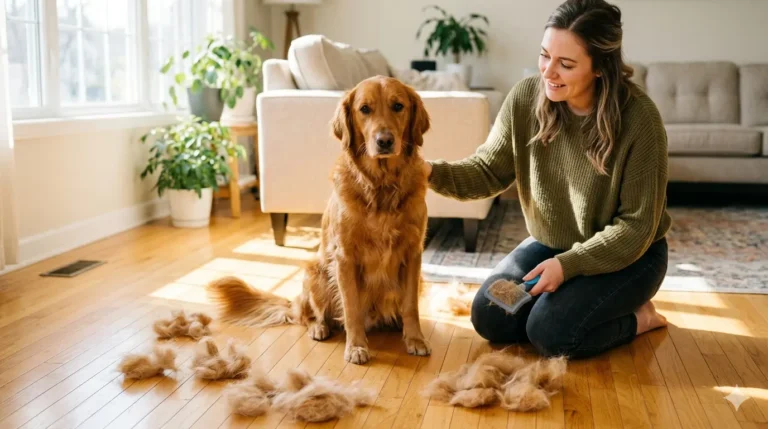
Normal shedding is distributed evenly across the coat. You will find fur on your couch, your clothes, and in every corner you just vacuumed – but the coat itself looks full and healthy.
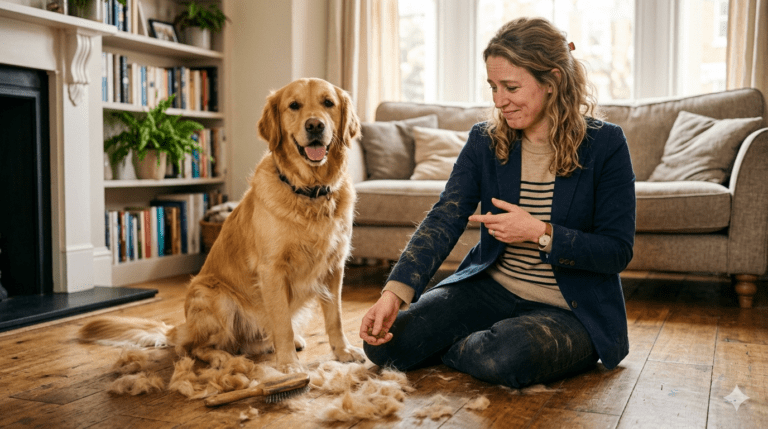
The volume changes with the season. Spring is the heaviest shed for most double-coated breeds. A Husky or Golden Retriever in April loses fur in impressive amounts – clumps, tufts, visible clouds when you brush them. That is normal. That is biology doing exactly what it is supposed to do.
Normal shedding does not come with red skin. It does not come with bald patches. It does not come with a pet that scratches, bites, or licks at the same spot repeatedly.
When those things appear – something else is happening.
The Warning Signs That Indicate Abnormal Shedding
Patchy or Asymmetrical Hair Loss
This is the clearest signal that shedding has crossed from normal into symptomatic.
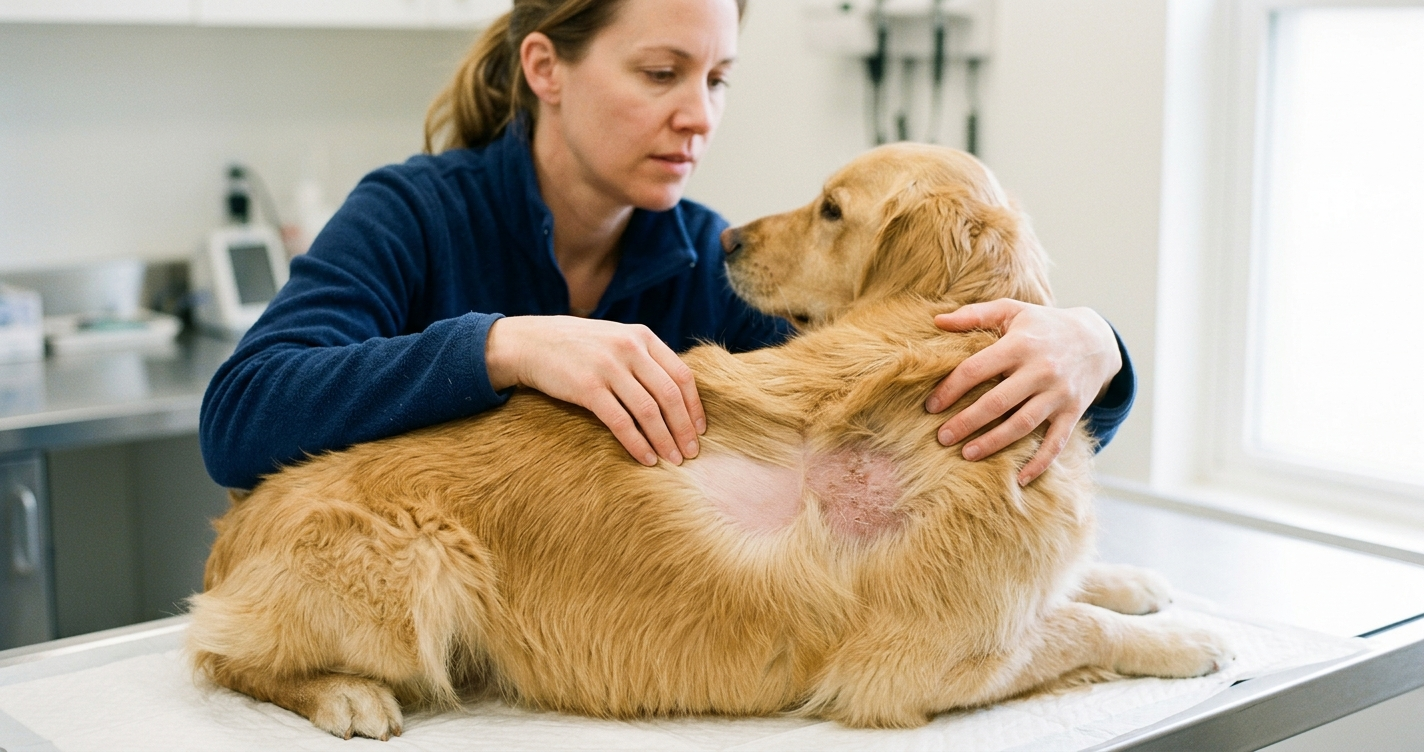
Healthy seasonal shedding comes out evenly across the whole coat. When fur is disappearing in a specific spot – a circular patch on the flank, thinning on one side of the body, a bald area on the tail – that pattern points to a cause. Symmetrical hair loss on both sides of the body simultaneously is a classic sign of hormonal conditions.
Any patchy hair loss warrants a vet visit. Do not wait to see if it resolves on its own.
Red, Irritated, or Flaky Skin Underneath the Fur
Part the fur in multiple spots during grooming and look at the skin underneath.
Healthy skin is pale pink and smooth. Skin that looks red, inflamed, thickened, or covered in flakes is not a grooming problem – it is a skin problem. This can indicate allergies, fungal infection, bacterial infection, or parasites. None of these improve with brushing alone.
Constant Scratching, Licking, or Biting at One Area
A pet that returns repeatedly to the same spot is telling you something.
Normal grooming behavior is distributed – cats groom all over, dogs scratch occasionally without fixating. When scratching, licking, or chewing becomes focused and repetitive, it usually means something is bothering that specific area. Flea allergy dermatitis is the most common cause in both dogs and cats – and the reaction site is often at the base of the tail or the hindquarters, not where you might expect to find fleas.
Sudden Heavy Shedding With No Seasonal Explanation
If your pet starts losing significantly more fur than usual in November or January – outside of the normal spring and fall windows – that sudden change deserves attention.
Stress is a common trigger. A new pet in the home, a move, a change in routine – these can all push a pet into a temporary shedding surge. But sudden heavy shedding combined with any other symptom – lethargy, increased thirst, weight change, appetite loss – is a combination that needs a vet, not a wait-and-see approach.
A Dull, Brittle Coat That Was Not Like That Before
Coat quality is one of the best indicators of a pet’s overall health.
A coat that has become noticeably duller, drier, or more brittle than it used to be – without a change in grooming routine – often reflects something happening internally. Poor nutrition is the most common cause and the easiest to address. Thyroid dysfunction, Cushing’s disease, and other systemic conditions also show up in the coat before they show up in other ways.
If the coat has changed character and diet has not changed – that is worth investigating.
Health Conditions That Cause Abnormal Shedding
These are the conditions most commonly behind shedding that does not follow the normal pattern. This list is not a diagnostic tool. It is information to help you have a more informed conversation with your vet.
Flea Allergy Dermatitis
The most common skin disease in both dogs and cats.
Some pets are allergic to flea saliva specifically – not just bothered by fleas, but genuinely allergic. A single flea bite triggers an intense reaction that causes intense itching, hair loss, and skin inflammation. The reaction typically appears around the base of the tail, the hindquarters, and the belly.
The tricky part: you may not find fleas on your pet. A flea-allergic pet grooms so aggressively that it removes the evidence. Black specks in the fur – flea dirt – that turn reddish-brown on a damp paper towel are a more reliable indicator than finding the fleas themselves.
Ringworm
Despite the name, ringworm is a fungal infection – not a worm.
It causes circular patches of hair loss with a slightly raised, scaly border. It is zoonotic, meaning it can spread from pets to humans. If you notice circular bald patches on your pet and anyone in your household develops a similar circular skin rash – vet appointment immediately, for both the pet and the person.
Ringworm is treatable. Untreated, it spreads.
Hypothyroidism in Dogs
The thyroid gland regulates metabolism and plays a direct role in coat health.
Hypothyroidism – an underactive thyroid – produces a recognizable pattern in dogs: symmetrical hair loss on both sides of the body, a dull and thickened coat, lethargy, weight gain without increased food intake, and a pet that seems to feel cold more than usual.
It is more common in middle-aged dogs and in certain breeds including Golden Retrievers, Labrador Retrievers, Dobermans, and Cocker Spaniels. Blood testing confirms it. It is very manageable with medication once diagnosed.
Cushing’s Disease
Cushing’s disease – hyperadrenocorticism – results from excess cortisol production.
The coat signs are distinctive: symmetrical hair loss that often starts on the trunk and spares the head and legs, a pot-bellied appearance, skin that becomes thin and sometimes darkened, and dramatically increased thirst and urination. Dogs with Cushing’s often drink and urinate so much that owners initially think it is a bladder problem.
It is more common in dogs over six years old and in breeds including Poodles, Dachshunds, Beagles, and Boxers. Diagnosis requires specific blood and urine tests – standard bloodwork alone does not confirm it.
Feline Hyperthyroidism
The most common endocrine disorder in cats over ten years old.
Unlike dogs, cats are far more likely to develop an overactive thyroid than an underactive one. Hyperthyroidism in cats causes weight loss despite increased appetite, increased vocalization, restlessness, a poor and unkempt coat, and sometimes vomiting or diarrhea.
The coat deterioration often looks like neglect – the cat stops grooming effectively. If your older cat’s coat has become matted and dull and they seem to have lost interest in grooming themselves, hyperthyroidism is high on the list of things to rule out.
Psychogenic Alopecia
Psychogenic alopecia is stress-related overgrooming in cats.
It causes symmetrical hair loss along the belly, inner thighs, and flanks – the areas a cat can reach easily during grooming. The skin underneath is usually normal – no redness, no infection. The cat is simply grooming those areas far more than necessary, often as a response to stress or anxiety.
It is real. It is also overdiagnosed. Before accepting a psychogenic alopecia diagnosis, physical causes – parasites, allergies, skin conditions – should be thoroughly ruled out. Many cats diagnosed with stress overgrooming turn out to have an underlying physical cause driving the behavior.
Hot Spots
Hot spots – pyotraumatic dermatitis – develop fast. Extremely fast.
A hot spot can go from nothing to a moist, raw, painful patch of skin the size of your palm within hours. They are most common in dogs, particularly in dogs with dense coats in warm weather. They start from a trigger – a flea bite, a small wound, an area the dog has been licking – and the dog’s response makes it dramatically worse.
Hot spots need prompt veterinary attention. The area needs to be clipped, cleaned, and treated. Leaving a hot spot untreated is not an option – they expand quickly and become infected.
Demodectic Mange
Demodex mites live normally on most dogs in small numbers without causing problems.
When a dog’s immune system is compromised – young puppies, elderly dogs, dogs on immunosuppressive medication – the mite population can grow out of control. The result is patchy hair loss, usually starting on the face and legs, with skin that may appear red and scaly.
It is not contagious to humans or other pets. It is a sign of immune vulnerability rather than poor hygiene. Diagnosis is confirmed by a skin scraping at the vet.
Dogs vs Cats – Key Differences in Abnormal Shedding
Dogs and cats present differently when something is wrong.
Dogs tend to show external symptoms more visibly – hot spots, scratching behavior, and skin changes are easier to spot because dogs are generally more expressive about discomfort and easier to examine.
Cats hide discomfort instinctively. A cat with a painful skin condition may look completely normal from across the room. Changes in grooming behavior – either grooming less or grooming one area obsessively – are often the first signal something is wrong. A cat that has stopped grooming altogether, or whose coat looks matted and unkempt when it previously looked healthy, needs a vet visit.
When to See a Vet – The Clear Lines
Do not wait and see if any of these are present:
- Circular bald patches with raised or scaly borders
- Symmetrical hair loss on both sides of the body
- Skin that looks raw, broken, infected, or has an odor
- Heavy shedding combined with increased thirst or urination
- Heavy shedding combined with weight change in either direction
- Heavy shedding combined with lethargy or appetite changes
- A cat whose coat has become matted and unkempt without explanation
- Any shedding pattern in a kitten that seems abnormal
These combinations are not grooming problems. They are medical problems that happen to show up in the coat first.
What You Can Do at Home While You Wait for the Appointment
If you have noticed warning signs and have a vet appointment scheduled, there are a few things worth doing in the meantime.
Keep a record of when you first noticed the change, what it looks like, and whether anything in the environment changed around the same time – new food, new pet, new cleaning products, seasonal changes. This information genuinely helps vets narrow down the cause faster.
Photograph the affected areas. Coat and skin conditions can change quickly. A photo from the day you noticed the problem gives the vet a baseline even if the appearance has shifted by appointment day.
Do not change food, supplements, or medication without speaking to your vet first. Well-intentioned changes can complicate diagnosis.
FAQ: Is My Pet’s Shedding Normal?
How do I know if my pet is shedding too much? Volume alone is not a reliable indicator – some breeds shed enormous amounts normally. What matters is the pattern. Even shedding across the whole coat during seasonal periods is normal. Patchy loss, bald spots, skin changes, or shedding accompanied by other symptoms like increased thirst or lethargy is not normal.
My dog has a bald spot but is not scratching. Should I be worried? Yes. Bald spots that appear without obvious irritation can indicate hormonal conditions like hypothyroidism or Cushing’s disease – conditions that do not always cause itching. Symmetrical bald patches on both sides of the body are a particularly clear signal to get blood work done.
Can stress cause my pet to shed more? Yes – in both dogs and cats. Stress-related shedding is usually temporary and resolves when the stressor is removed. If heavy shedding continues for more than two to three weeks after an obvious stressor has passed, a vet visit is worth scheduling.
My cat is losing fur on her belly. Is that normal? Belly hair loss in cats is often caused by overgrooming – either stress-related or driven by an underlying physical cause like allergies or parasites. It is worth a vet visit to rule out physical causes before assuming it is behavioral.
What does ringworm look like on a pet? Circular patches of hair loss with a slightly raised, scaly, or crusty border. The patches are usually round or oval. They most commonly appear on the face, ears, and paws but can appear anywhere. If you or anyone in your household develops a similar circular skin rash – see a doctor and take your pet to the vet.
Can poor diet cause abnormal shedding? Yes. A diet low in quality protein and omega-3 fatty acids produces brittle, dull fur that sheds excessively. This is different from the patchy or symptomatic shedding described in this article – diet-related shedding is typically distributed across the whole coat rather than appearing in patches. Improving diet is the right first step for general excessive shedding without other symptoms.
At what age should I be more alert to abnormal shedding? For cats, hyperthyroidism becomes significantly more common after age ten – coat changes in older cats deserve prompt attention. For dogs, hormonal conditions like hypothyroidism and Cushing’s disease are more common in middle-aged and older dogs. Young animals showing patchy hair loss should be checked for ringworm and mange.
Conclusion
Most shedding is normal. Your pet’s coat cycling through seasons, responding to daylight changes, and producing fur at varying rates throughout the year – that is biology.
The signs that something more is happening are specific. Patches. Asymmetry. Skin changes. Behavioral shifts. Symptoms that do not fit the seasonal pattern you have learned to expect from your pet.
You are in a better position than most to notice these things because you groom your pet regularly. The owners who catch skin and coat problems early are almost always the ones who brush consistently and actually look at what is underneath the fur.
Trust what you see. When something looks different from normal – it usually is.