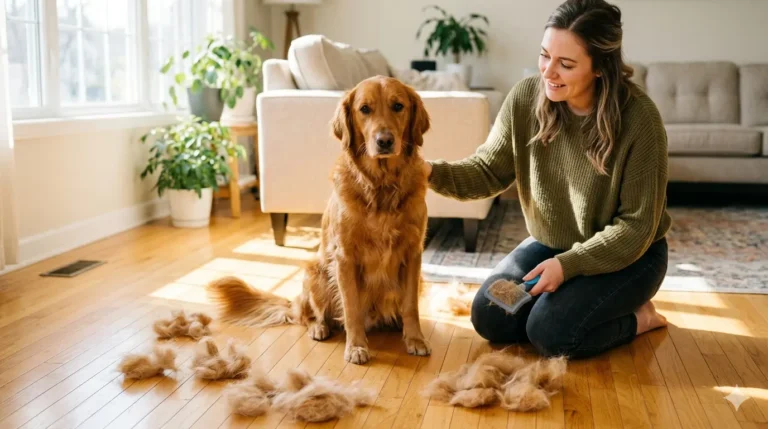
Best Deshedding Brush for Dogs in 2026 – What Actually Works
I have bought a lot of dog brushes I regret.
Not because they were expensive. Because they looked impressive, had thousands of reviews, and my dog wanted nothing to do with them after the second session.
The problem was not my dog. It was the brush.
Most people buy deshedding tools based on marketing. Big promises, aggressive-looking metal tines, removes 90% of loose undercoat on the label. What they do not tell you is that half those tools are too harsh for regular use. And once your dog decides grooming is uncomfortable, you have a much bigger problem than shedding.
This guide is about finding the right brush – not the most impressive-looking one.
Why the Wrong Brush Makes Shedding Worse
When a brush scratches or pulls uncomfortably, your dog tenses up. Their skin gets irritated. Some dogs start avoiding the brush entirely.
So you brush less. And shedding gets worse, not better.
The right deshedding brush should feel close to a massage. Firm enough to reach the undercoat. Gentle enough that your dog does not dread it. That balance is actually harder to find than it sounds.
What Deshedding Actually Means
Deshedding is specifically about removing loose fur from the undercoat – the dense, soft layer underneath the guard coat that most dogs shed heavily twice a year.
A regular slicker brush or bristle brush works on the surface. A deshedding tool reaches deeper.
For double-coated breeds – Huskies, Golden Retrievers, German Shepherds, Labrador Retrievers, Corgis, Malamutes – that distinction matters a lot. During shedding season, the undercoat releases in volume. A surface brush barely makes a dent.
If your dog is a single-coated or short-haired breed, a deshedding tool is usually overkill. A rubber curry brush or grooming mitt is gentler and more appropriate.
The 5 Types of Dog Grooming Brushes
1. Deshedding Brush With Rounded Pins
Best for double-coated breeds during shedding season – Husky, Golden Retriever, German Shepherd, Corgi, Malamute, Labrador.
The best versions have flexible, rounded pins that penetrate the topcoat and pull loose undercoat fur without scratching the skin. Run the brush across your palm before you use it on your dog. If it scratches you, it will scratch your dog.
Avoid tools with rigid metal teeth and no flexibility. They are efficient at pulling fur. They are also efficient at leaving your dog miserable.
2. Undercoat Rake
Best for very thick double coats – Chow Chow, Bernese Mountain Dog, Great Pyrenees, Newfoundland.
An undercoat rake looks like a wide-tooth comb with longer teeth. It reaches deeper than most deshedding brushes and is built specifically for dogs with extremely dense undercoats that regular tools cannot fully penetrate.
Do not use this on thin coats or short-haired dogs. It is too much tool for the job.
3. Slicker Brush
Best for medium coats, removing surface tangles, and finishing after deshedding – Golden Retriever, Spaniel, Border Collie, Shih Tzu.
The slicker brush is the workhorse of dog grooming. Fine wire bristles on a flat or curved pad – good for detangling, smoothing the topcoat, and general maintenance between heavy deshedding sessions.
Most dogs tolerate slicker brushes well. Just do not press hard. The wire bristles can scratch if you apply too much pressure.
4. Rubber Curry Brush and Grooming Mitt
Best for short-haired, single-coated dogs – Boxer, Beagle, Dalmatian, Weimaraner, Vizsla.
Short-haired dogs do not need metal tools at all. A rubber curry brush creates friction that lifts loose fur off the coat without touching the skin aggressively. Most short-haired dogs actually enjoy this – it mimics a scratch.
It is also the tool to start with for dogs who are genuinely scared of grooming. Low threat. Good contact. Builds the association that grooming feels good.
5. Wide-Tooth Comb
Best for long-haired dogs, pre-grooming detangling, and checking for mats – Afghan Hound, Maltese, Yorkshire Terrier, Lhasa Apso.
Always use a wide-tooth comb before any brush on a long-haired dog. Running a brush through a tangle pulls on the skin. Running a comb through it first loosens the knot before it becomes a problem.
This order matters: comb first, brush second. Most groomers follow this automatically. Most owners skip it and wonder why their dog reacts badly.
What to Look for in a Deshedding Brush
Before anything else, check these four things.
Rounded or ball-tipped pins. The pins should not feel sharp against your skin. Ever. If they do, skip it.
Flexibility in the bristle head. A completely rigid brush head transfers all pressure directly to the skin. Some flex means the brush adapts to body curves instead of dragging.
Comfortable handle. You are going to hold this for ten to fifteen minutes at a time, a few times a week. An uncomfortable handle means shorter sessions.
Easy fur removal after brushing. Digging compacted fur out of bristles with your fingers is unpleasant enough that people skip grooming sessions to avoid it. Self-cleaning mechanisms – where you press a button and the fur lifts off – genuinely change how often people actually brush their dogs. Less friction in the routine means more consistent grooming means less fur on your furniture.
Brush by Coat Type
| Coat Type | Best Brush | Frequency |
|---|---|---|
| Short smooth – Boxer, Beagle | Rubber curry brush or grooming mitt | 1-2x per week |
| Medium double coat – Lab, Golden | Slicker brush + deshedding brush | 3-4x per week during shedding |
| Heavy double coat – Husky, Malamute | Deshedding brush + undercoat rake | Daily during blow coat season |
| Long silky – Maltese, Yorkie | Wide-tooth comb + soft bristle brush | Daily to every other day |
| Curly/wavy – Poodle, Doodle | Slicker brush + wide-tooth comb | Every 2-3 days |
| Wire coat – Schnauzer, Terrier | Slicker brush + stripping comb | Weekly |
The Breeds That Need Deshedding Tools Most
If you have one of these dogs, a proper deshedding brush is not optional. It is just part of owning them.
Siberian Husky – The most famous heavy shedder. Blows coat twice a year in volumes that genuinely surprise first-time Husky owners. During peak shed, daily brushing with a deshedding tool is realistic and necessary.
Golden Retriever – Dense, water-resistant double coat. Moderate shedding year-round plus two heavy seasonal sheds. The feathering around the legs and chest tangles easily and needs extra attention.
German Shepherd – One of the heaviest shedding breeds relative to body size. Double coat that releases aggressively in spring and fall. Weekly brushing with a deshedding tool at minimum, daily during shedding season.
Labrador Retriever – Labs are deceptively heavy shedders. The short coat makes people think grooming is not important. The dense undercoat says otherwise.
Corgi – A lot of undercoat in a small package. Their shedding output per pound of dog is honestly impressive.
Bernese Mountain Dog – Long, thick, beautiful coat that sheds substantially. Regular deshedding plus an undercoat rake for the densest areas.
Alaskan Malamute – Similar to Husky but even denser coat. Professional grooming appointments during seasonal sheds are genuinely worth the cost for Malamute owners.
To understand exactly when each breed’s heaviest shed periods hit so you can prepare in advance, our guide on dog and cat shedding season by month breaks it down month by month.
How to Actually Use a Deshedding Brush
Having the right brush is half the job. Using it correctly is the other half.
Start with a comb if there are any tangles. Running a deshedding tool through a knot pulls on the skin. Never skip this on long-haired dogs.
Brush in the direction of hair growth – always. Going against the grain is uncomfortable and less effective. You end up pushing fur around instead of lifting it out.
Use short strokes, not long sweeps. This surprises most people. Short, deliberate strokes lift more loose fur than one long drag down the back.
Work in sections. On large dogs especially, it is easy to miss dense patches around the chest, hindquarters, and behind the ears. Go through the whole dog methodically.
Do not press hard. The brush does the work. Pressing hard does not remove more fur – it just irritates the skin.
Keep sessions short. Ten to fifteen minutes, a few times a week. Not forty-five minutes once a month. Your dog stays relaxed, you remove more fur overall, and the routine actually sticks.
The Deshedding Routine That Actually Works
Every two to three days during normal periods: a quick ten-minute session with a deshedding brush, followed by a slicker brush to smooth the topcoat.
During shedding season in spring and fall: daily brushing if you can manage it, every other day at minimum. This is when a deshedding tool earns its entire cost in one week. Our breakdown of how to reduce pet shedding covers the full seasonal routine and what to expect at each stage.
Monthly: a full bath to loosen dead fur, followed by a thorough brushing session once the coat is completely dry. Never brush a wet coat – it stretches the hair shaft and can cause breakage.
A bath during heavy shedding genuinely loosens the undercoat and makes the brushing session afterward dramatically more productive. Use a gentle shampoo. Overbathing strips the skin’s natural oils and can actually increase shedding – once a month is usually the right rhythm.
When to See a Professional Groomer
Some situations are better handled by a professional.
If your dog has mats that feel solid or sit close to the skin – stop. Do not try to brush or cut these at home. A professional groomer has the right tools and the training to remove mats safely without cutting skin. Our article on how to safely remove mats from pet fur covers exactly where the line is between what you can handle at home and when to hand it off.
Heavy-shedding breeds like Huskies and Malamutes during peak blow coat season genuinely benefit from a professional deshedding treatment – a bath, blow-dry, and thorough brushing that removes a volume of undercoat that would take most owners multiple home sessions to match. For a full breakdown of which grooming tasks belong at home and which ones are worth paying for, our guide on when to see a professional groomer vs doing it at home covers the decision honestly.
The Purry Self-Cleaning Brush
The Purry Self-Cleaning Brush was designed specifically around the problems that make dog owners give up on regular grooming.
The rounded stainless steel pins reach the undercoat without scratching skin – which is why dogs that previously hated being brushed usually tolerate it much better. The self-cleaning button means you press once and the collected fur lifts off in one clean piece. No picking strands out of bristles with your fingers.
It is a finishing brush for maintained coats – not a dematting tool. If your dog has tangles or compacted undercoat, work through those first with a wide-tooth comb or undercoat rake. The Purry brush handles the final step: collecting loose surface fur and leaving the coat smooth.
That small reduction in friction is what makes people actually brush consistently – and consistency is the whole game with shedding.
FAQ: Best Deshedding Brush for Dogs
What is the best deshedding brush for a Husky?
A deshedding brush with rounded, flexible pins for regular sessions, plus an undercoat rake for the densest areas. During blow coat season, daily brushing and at least one professional deshedding session per year is realistic for most Husky owners.
How often should I use a deshedding brush on my dog?
For double-coated breeds, three to four times per week during shedding season and once or twice weekly otherwise. For single-coated or short-haired breeds, a rubber curry brush once or twice a week is usually enough.
Can I use a deshedding brush on a short-haired dog?
Usually unnecessary and sometimes too harsh. A rubber grooming mitt or curry brush is gentler and more appropriate for short, smooth coats.
Why does my dog hate being brushed?
Almost always the brush. Sharp pins, too much pressure, or sessions that went on too long early on. Switch to a softer tool, shorten the sessions significantly, and use treats throughout. The association rebuilds over time.
Does a deshedding brush cut the fur?
It should not. A good deshedding brush removes loose, dead fur that is already releasing from the follicle. It should not cut or damage healthy fur. If you are noticing breakage after brushing, the tool is too harsh or you are pressing too hard.
How long does deshedding season last?
Typically four to six weeks per shed cycle. Most double-coated breeds shed heavily twice a year – late winter into spring, and late summer into fall. Indoor dogs in climate-controlled homes sometimes shed more consistently year-round.
The Short Version
The best deshedding brush for your dog is the one that matches their coat type and that your dog will actually tolerate.
Rounded tips. Some flexibility. Easy cleanup.
Used consistently – ten to fifteen minutes, a few times a week – that brush will make more difference to shedding than any product, supplement, or grooming technique on its own.
The fur will not stop. But with the right tool and a real routine, it stops running your life.