Long-Haired Cat Grooming: How to Prevent Tangles and Mats
My neighbor has a Persian named Gerald.
Gerald is beautiful. White, fluffy, looks like a cloud with opinions.
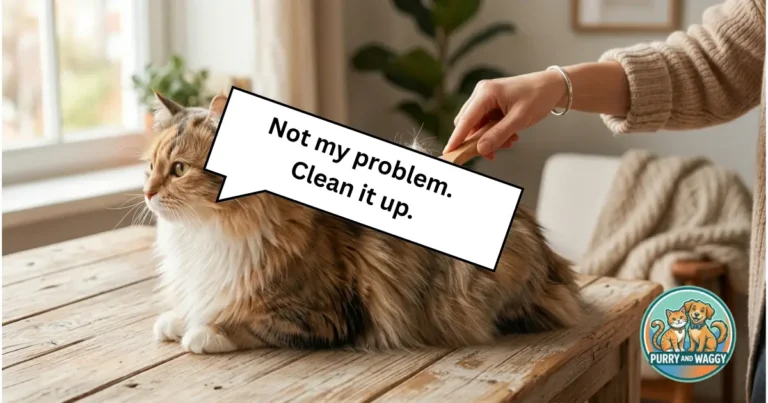
Gerald also came to her once with a mat so tight behind his ear that the vet had to sedate him to remove it safely. She had no idea it was there. Gerald never complained. He just sat on the windowsill looking regal while a small disaster quietly developed under his fur.
That is the thing about long-haired cats. They hide problems well. And by the time you notice something is wrong, it has usually been wrong for a while.
This guide is about staying ahead of that – not reacting to it.
Why Long-Haired Cats Cannot Just Groom Themselves
Cats are fastidious groomers. Anyone who has watched a cat spend forty minutes cleaning a paw knows this.
But long-haired cats have more fur than their tongues can realistically manage.
The undercoat – that dense, soft layer underneath the longer guard hairs – traps loose fur instead of letting it fall away naturally. Loose fur tangles with live fur. Tangles tighten into mats. Mats pull on skin.
Because cats hide discomfort instinctively, you often will not know any of this is happening until you go to pet them and find a solid knot the size of a golf ball. Regular grooming is not optional for long-haired cats. It is just part of what they need.
The Breeds That Need the Most Attention
Not all long-haired cats are equal work.
Persian – The highest maintenance of the group. Their fur is uniquely dense and fine, which means it mats faster than almost any other breed. Daily brushing is genuinely necessary, not a recommendation. Their flat faces also mean they cannot self-groom as effectively as other cats.
Maine Coon – Long, thick, and surprisingly manageable compared to Persians. Their fur has a slightly coarser texture that is more resistant to matting. Still needs brushing every other day at minimum, daily during shedding season.
Ragdoll – Semi-long fur with a silky texture that tangles easily, especially around the neck ruff and under the legs. Deceptively high maintenance for a breed marketed as easy.
Norwegian Forest Cat – Dense double coat built for actual Norwegian winters. The undercoat sheds heavily twice a year. During those periods, daily grooming is realistic and necessary.
Himalayan – Persian body with Siamese coloring. Same grooming demands as a Persian. The color contrast makes mats harder to spot until they are already serious.
Birman – Silky, single-layer coat with less undercoat than most on this list. Easier than Persians but still needs regular attention around the collar and hindquarters.
If someone tells you long-haired cats are low maintenance, ask them how much they actually groom their cat. The answer will be illuminating.
The Tools You Actually Need
You do not need a lot of tools. You need the right ones.
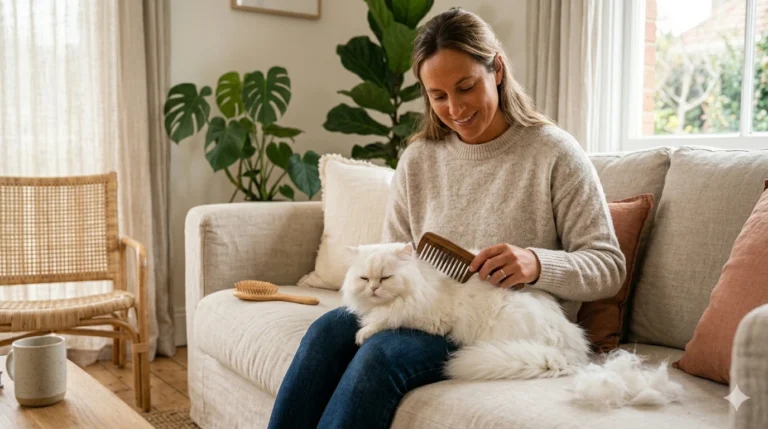
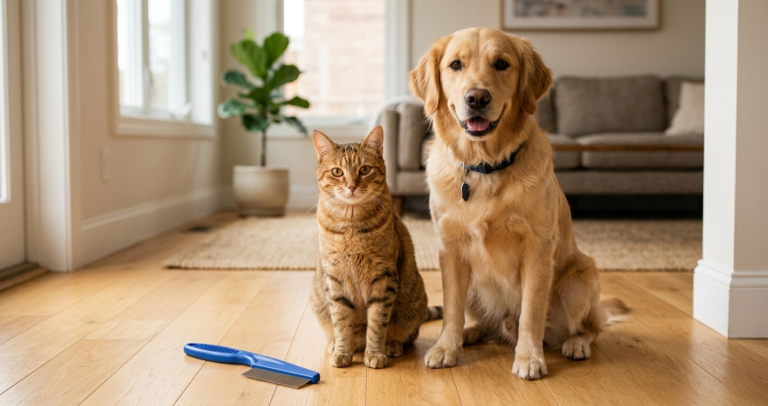
Wide-tooth comb – This is where every grooming session should start. Not a brush. A comb. Running a brush through a tangle pulls on the skin. A wide-tooth comb lets you work through knots gently before they become a problem. A stainless steel one with rotating teeth reduces the pulling sensation, which matters for cats new to grooming or already suspicious of the process.
Slicker brush – Fine wire bristles on a flat pad. Use this after the comb to smooth the topcoat and catch remaining loose fur. Do not press hard – the wire tips can scratch if you apply too much pressure.
Dematting comb – Specifically for working through existing tangles. Fewer, longer, slightly angled teeth. This is the tool for knots the wide-tooth comb cannot fully resolve. Always hold the fur at the base before working on any tangle.
Grooming scissors with rounded tips – For emergencies only. Never regular scissors. The skin can be deceptively close to a mat and cats move unpredictably.
Detangling spray – Not essential but genuinely useful during shedding season or when mats are starting to form. A light spray before you comb makes the whole process faster and less uncomfortable.
One thing to skip: combination brush-and-comb tools that claim to do everything. They usually do nothing particularly well. A dedicated comb and a dedicated slicker brush outperform any multipurpose tool.
An Honest Word About the Purry Brush
The Purry Self-Cleaning Brush is a slicker-style brush with rounded stainless steel pins and a one-button self-cleaning mechanism. Press the button and the fur lifts off in one piece.
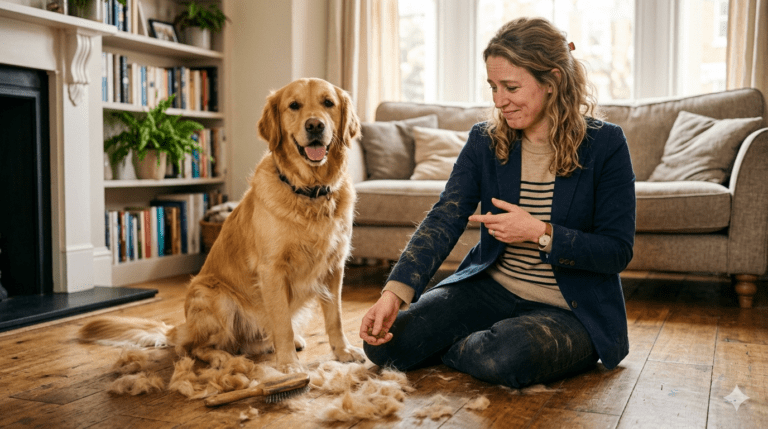
Where it works well for long-haired cats: it is a solid finishing brush. After you have worked through the coat with a wide-tooth comb and cleared any tangles, the Purry brush is good for smoothing the topcoat, catching remaining loose fur, and leaving the coat looking tidy.
Where it will not help: it is not a dematting tool. Do not use it on a coat with existing tangles – you will pull on the skin and your cat will not forgive you quickly. It also will not replace an undercoat rake on a very dense double coat like a Norwegian Forest Cat during peak shedding season.
The correct order of use: wide-tooth comb first – dematting comb if needed – Purry brush last as the finishing step.
Used that way, it does exactly what it should.
Where Mats Form First
Mats do not appear randomly. They have favorite spots.
Behind the ears – Fur rubs against the head constantly. First place to check, every session.
Under the armpits – Where the front legs meet the body. Friction from walking. Easily missed because cats do not love having this area touched.
Around the collar area – If your cat wears a collar, check underneath it every single session. Fur compresses against the collar edge and tangles fast.
Base of the tail – Especially in cats that sit a lot. Fur gets compressed and twisted over time.
Belly and groin area – Long-haired cats often resist belly touching, which is exactly why mats love it there. Takes patience and trust to groom this area well.
Behind the hind legs – Another friction zone. Often where the worst mats develop because it is easy to miss during a quick brush.
Make a mental checklist of these spots and hit them specifically at every session. A thirty-second check in each area catches problems before they develop.
How to Actually Brush a Long-Haired Cat
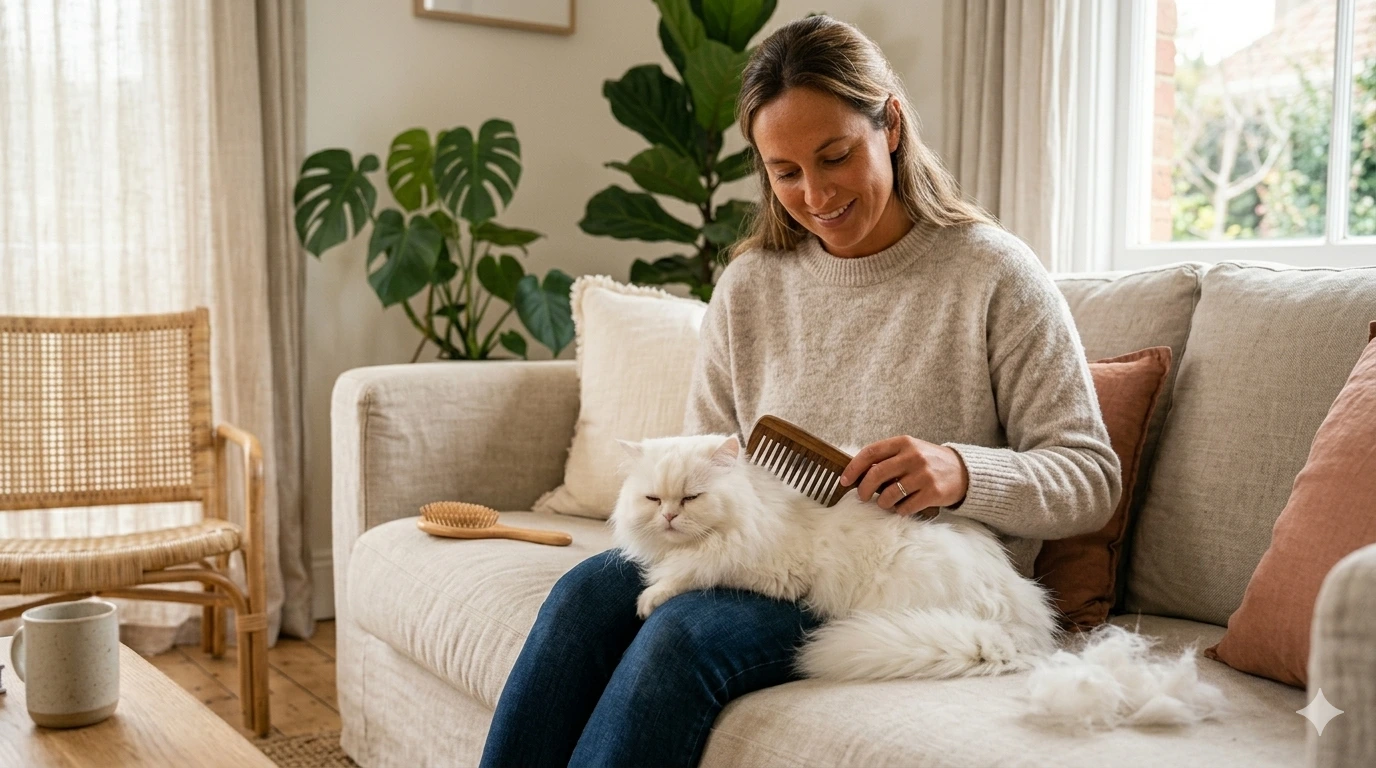
Start with the comb, always. Work in sections, from the ends of the fur toward the body. Never start at the skin and drag outward – that pulls any tangle across sensitive skin.
Hold the fur at the base when you hit resistance. Your free hand pinches the fur close to the skin before you work on a tangle. The cat feels the hold instead of the pull. It is the difference between a cat that tolerates grooming and one that leaves the room.
Use short strokes, not long sweeps. Short deliberate strokes lift more fur than one long drag down the back. Work with the direction of hair growth – against the grain is uncomfortable and creates static, which makes fur more likely to tangle afterward.
Save the belly for last. It is usually the most sensitive area. If you start there, the session is probably over. Build goodwill with easier areas first.
Finish with the slicker brush once the comb moves through everything smoothly. Follow with the Purry brush if the coat is tangle-free to smooth the topcoat and remove remaining loose fur.
The whole session should not take more than ten to fifteen minutes for a well-maintained coat. If it is consistently taking longer, the coat needs more frequent attention.
Building a Routine That Actually Sticks
Daily – Persians, Himalayans, heavy shedders: Quick five-minute comb-through on the problem spots. Follow with a slicker or finishing brush.
Every other day – Maine Coon, Ragdoll, Norwegian Forest Cat: Same process, slightly longer. Ten minutes, full body, all problem zones.
During shedding season – spring and fall: Move everything up a level. Daily for breeds that were every other day. Twice daily for Persians during peak shed is not unreasonable.
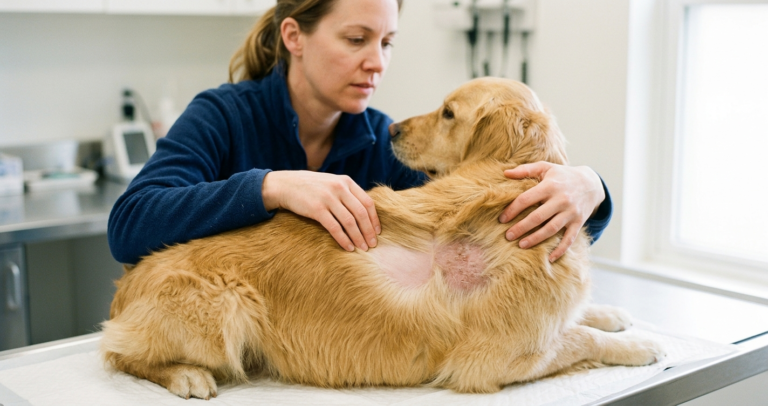
Monthly: Full inspection. Part the fur down to the skin in multiple spots. Look for red or irritated skin, developing tangles the comb might have missed, anything that looks different from last month.
Keep sessions positive. Treats during and after grooming matter, especially while building the association for the first time. Two calm five-minute sessions beat one ten-minute battle every time.
To understand exactly when your cat’s heaviest shed periods hit, our guide on dog and cat shedding season by month breaks down every breed’s peak periods so you can step up frequency before the surge hits – not after.
How to Handle a Mat You Have Already Found
Do not panic. Do not grab scissors.
Most mats – especially ones caught early – can be removed without cutting.
Step one: Hold the fur firmly at the base, between the mat and the skin. Non-negotiable. Everything else depends on this.
Step two: Apply detangling spray or a small amount of coconut oil to the mat. Let it sit two or three minutes. This genuinely loosens things.
Step three: Using a dematting comb, start working at the very outer edges of the mat – not the center. Work slowly inward.
Step four: Take breaks if your cat is getting stressed. A mat removed over two calm sessions is infinitely better than one traumatic session that destroys the grooming relationship.
The Purry brush is not the right tool here. Do not use a slicker brush on a mat. Use the dematting comb, work slowly, and save the brush for after the tangle is fully gone.
If the mat feels solid, sits directly against the skin, or you cannot tell where the mat ends and the skin begins – stop and call a groomer. For a full breakdown of what you can safely handle at home versus what needs professional hands, our article on how to safely remove mats from pet fur covers the line clearly.
Bathing a Long-Haired Cat
Most long-haired cats need an occasional bath. Not frequently – but occasionally.
Bathing removes oil buildup that contributes to matting and loosens dead undercoat fur during shedding season. Use lukewarm water and a cat-specific shampoo – human shampoo strips natural oils and irritates skin.
Dry thoroughly. A damp undercoat on a long-haired cat mats significantly faster than a dry one. Low-heat blow dryer from a distance if they tolerate it. If not, a warm room and patience.
Never brush a wet coat. The hair shaft stretches when wet instead of releasing. Comb through only when fully dry. Once every six to eight weeks works for most breeds. Persians may need it more frequently.
Diet and the Coat
A long-haired cat with a poor diet has a coat that shows it. Dull, dry, brittle fur breaks easily and tangles faster than a well-nourished coat.
Omega-3 fatty acids are the biggest dietary factor for coat health. Fish-based foods or a vet-recommended fish oil supplement improve coat texture noticeably within six to eight weeks. Hydration matters too – adding wet food a few times a week makes a real difference for cats that eat mostly dry kibble.
Our guide on the best foods to reduce pet shedding covers which specific nutrients move the needle on coat quality and what to look for on a food label.
When to See a Professional Groomer
Severe matting – If the coat has gotten away from you, a professional has the tools and experience to handle it safely. A full shave-down is sometimes the kindest option. It grows back.
The lion cut – Some Persian and Maine Coon owners opt for a professional lion cut once or twice a year, particularly in summer. The body coat is shaved short while the head and paws stay fuller. Many cats are noticeably more comfortable afterward.
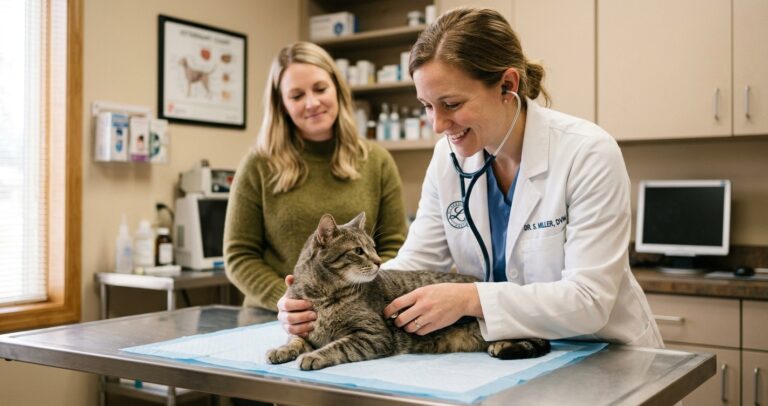
Routine professional grooming – Even with a solid home routine, a professional groom every two to three months keeps a long-haired coat in better condition than home grooming alone. Our guide on when to see a professional groomer vs doing it at home covers exactly which situations call for which approach.
Warning Signs to Watch During Grooming
Grooming puts you in a position to notice things a vet would not see until something became serious.
Red or irritated skin when you part the fur – not just at mat sites but anywhere. Black specks near the skin could be flea dirt – small dark dots that turn reddish-brown on a damp paper towel are a giveaway.
Bald patches or thinning in spots you are not creating can indicate overgrooming, stress, or a skin condition. A strong reaction to a specific area – pulling away or vocalizing when you touch somewhere they usually tolerate – is worth mentioning to your vet.
None of these are reasons to panic. They are reasons to follow up.
FAQ: Long-Haired Cat Grooming
How often should I brush a long-haired cat?
Persians and Himalayans need daily brushing. Maine Coons, Ragdolls, and Norwegian Forest Cats do well every other day, bumped to daily during shedding season. The only wrong answer is inconsistency.
My cat hates being brushed. What do I do?
Start with two to three minute sessions. Use treats throughout. Begin with areas your cat is least sensitive about and build up slowly. A grooming glove is often a good starting point – it feels more like petting than grooming.
Is the Purry Self-Cleaning Brush good for long-haired cats?
As a finishing brush after combing – yes. As a first step on a tangled or neglected coat – no. Always comb first, remove any tangles, then use the Purry brush to smooth and collect loose fur at the end of the session.
Can I use a dog brush on my cat?
Sometimes. A soft slicker brush designed for dogs often works fine. Avoid anything with rigid metal tines or heavy deshedding tools designed for thick double-coated dogs – too harsh for most cats.
Do long-haired cats need baths?
Occasionally – every six to eight weeks for most breeds, more frequently for Persians. It removes oil buildup that contributes to matting.
Is it cruel to shave a long-haired cat?
Not when done professionally for genuine reasons – severe matting, heat discomfort, medical necessity. The coat grows back within a few months and many cats are more comfortable afterward.
Gerald Is Fine Now
His owner bought a wide-tooth comb and set a phone reminder three times a week.
He still looks like a cloud. A significantly more comfortable one.
Long-haired cats are worth the work. But they do need the work. A wide-tooth comb, a slicker brush, fifteen minutes a few times a week, and specific attention to the spots where mats form first. That is the whole system.
Use the right tool for each step. Do not skip the comb. Do not rush. And if a mat is already rock solid – call a groomer.