Dog and Cat Shedding Season: What to Expect Every Month of the Year
Dog and cat shedding season is not random. It follows a biological calendar – one that most pet owners never see explained clearly anywhere.
My neighbor called me last April in a mild panic. Her Husky had started leaving fur on every surface in the house – couch, carpet, her work clothes, her coffee. She thought something was wrong. Nothing was wrong. Her dog was just doing exactly what Huskies do every spring, right on schedule.
This guide breaks down what shedding actually looks like month by month, why it happens when it does, and what you can do about it without losing your mind.
Why Shedding Follows a Season at All
Most people assume shedding is triggered by temperature. It is not.
Shedding is driven by photoperiod – the number of daylight hours your pet is exposed to each day. As days get longer in spring, the brain signals the coat to release the winter undercoat. As days shorten in fall, the coat shifts again.
Melatonin and prolactin are the hormones doing the actual work here. Light levels change – hormone levels shift – the hair growth cycle responds.
The four phases of that cycle are anagen (growth), catagen (transition), telogen (rest), and exogen (active shedding). The exogen phase is what you see on your floor.
Indoor Pets Shed Differently
Here is something most guides skip entirely.
Indoor pets are exposed to artificial light for 12 to 16 hours a day, year-round. That constant light disrupts the seasonal signal. The result is that indoor cats and dogs tend to shed moderately all year instead of in dramatic seasonal bursts.
This is why your indoor cat seems to shed constantly no matter what month it is. She is not sick. Her biological clock is just confused by your living room lights.
Outdoor dogs and dogs that spend significant time outside tend to have more dramatic seasonal sheds – heavier in spring, lighter in fall, quieter in winter.
Dog and Cat Shedding Season – Month by Month
January – February: The Quiet Months
For most dogs and cats, January and February are the lowest-shed period of the year.
The coat is in its winter resting phase. Daylight hours are at their shortest. The hair growth cycle is in telogen – holding, not releasing.
Double-coated breeds like Golden Retrievers and German Shepherds still shed year-round, but January shedding is noticeably lighter than what you will see in three months.
This is a good time to establish a regular brushing routine before the spring surge hits. Once or twice a week is enough for most breeds right now.
March: The First Warning Signs
March is when dog and cat shedding season begins to shift.
Daylight hours are increasing. The photoperiod signal is changing. You will start to notice more fur in the brush, more on the couch, more in the corners of rooms.
Persian cats and Himalayans can start shedding noticeably in March. Maine Coons and Norwegian Forest Cats are usually a few weeks behind them.
For dog owners with Huskies, Malamutes, or Bernese Mountain Dogs – March is your warning month. Start increasing brush frequency now before the full blow coat hits.
April – May: Peak Shedding Season
This is it. April and May are the heaviest shedding months for the majority of dogs and cats.
Double-coated breeds are in full exogen phase. A Siberian Husky in April is not shedding – it is losing its entire undercoat in chunks. Daily brushing is not an exaggeration for these breeds during blow coat.
For cats, spring shedding peaks in April for most long-haired breeds. You will find fur in places that make no geometric sense – inside shoes, on top of the refrigerator, in sealed containers.
Grooming frequency should roughly double from what you were doing in January. If you have a double-coated dog and you are not already working with an undercoat rake or dematting comb, April is when you will feel the difference between having the right tools and not having them.
A finishing brush like the Purry Self-Cleaning Brush works well at this stage – but only after the loose undercoat has been removed with an appropriate deshedding tool first. The correct order is wide-tooth comb first, undercoat rake or dematting comb if needed, finishing brush last. Skipping the first step and going straight to a slicker brush on a blow-coat dog is a frustrating experience for everyone involved.
June: Coming Down From the Peak
By June, most dogs and cats have shed the bulk of their winter coat.
Shedding is still above the winter baseline but declining. The dramatic fur clouds of April are mostly behind you. German Shepherds are the notable exception – they shed heavily almost year-round and June does not give their owners much of a break.
This is a good month to deep-clean your home and reset your grooming kit. Wash brush heads. Replace anything that has bent pins or lost tension.
July – August: Summer Maintenance Mode
Shedding is at a low-to-moderate level for most breeds in summer.
Pets with single-layer coats – Boxers, Beagles, Siamese, Bengals – shed at roughly consistent levels year-round and summer looks like any other month for them.
Double-coated breeds are in a relative rest period between their spring and fall sheds. This is the easiest grooming stretch of the year for most owners.
One thing to watch in summer: dehydration affects coat quality. Dry skin leads to more brittle fur, which breaks off more easily and looks like shedding even when the hair cycle is in a resting phase. Make sure your pet is drinking enough water – it genuinely affects how much fur ends up on your floor.
September – October: The Fall Shed Begins
The fall shed is real – but it is smaller than spring for most breeds.
Daylight hours are shortening again. The coat is shifting from summer to winter mode. For double-coated dogs and cats, this means releasing some of the lighter summer coat to make room for the denser winter undercoat growing in underneath.
The fall shed typically lasts four to six weeks. It is noticeably shorter and less intense than the spring blow coat.
Ragdolls and Norwegian Forest Cats tend to shed more noticeably in fall than some other cat breeds. Corgis, despite their small size, shed heavily in fall – an amount that surprises most first-time Corgi owners every single year.
Resume your increased brushing schedule. Two to three times a week is appropriate for most double-coated breeds during September and October.
November – December: Winding Down Again
By November, most of the fall coat transition is complete.
The new winter coat is coming in. Shedding drops back toward the January baseline. Grooming frequency can ease off again for most breeds.
This is not true for Persians or Himalayans – their dense, long coats require consistent grooming year-round regardless of season. Two to three times a week is non-negotiable for these breeds even in December, or you are managing mats by January.
If you are seeing heavy shedding in November or December outside of what is described here – patchy loss, bald spots, skin changes, behavioral shifts – that is worth a vet visit. Our article on warning signs every owner should know covers the specific patterns that separate seasonal shedding from something that needs professional attention.
Breed-by-Breed Shedding Calendar
| Breed | Peak Season | Shed Level | Notes |
|---|---|---|---|
| Siberian Husky | April – May | Extreme | Full blow coat – daily brushing required |
| Alaskan Malamute | April – May | Extreme | Similar to Husky – not for the faint-hearted |
| Golden Retriever | April – May + Sept – Oct | Heavy | Two distinct peaks per year |
| German Shepherd | Year-round | Heavy | Spring and fall peaks but never fully stops |
| Labrador Retriever | April – May + Sept – Oct | Heavy | Short coat – still sheds significantly |
| Corgi | April – May + Sept – Oct | Heavy | Size is deceptive – shed volume is not |
| Maine Coon | April – May | Heavy | Later starter than some breeds |
| Persian | Year-round | Very Heavy | No quiet season – consistent grooming essential |
| Ragdoll | April – May + Sept – Oct | Moderate – Heavy | Fall shed more noticeable than most cats |
| Norwegian Forest Cat | April – May | Heavy | Dense undercoat releases fast |
| Siamese | Year-round | Low | Short single coat – barely noticeable |
| Bengal | Year-round | Low – Moderate | Short coat – consistent low shed |
What Abnormal Shedding Actually Looks Like
Seasonal shedding is heavy fur coming out evenly across the body during the expected months.
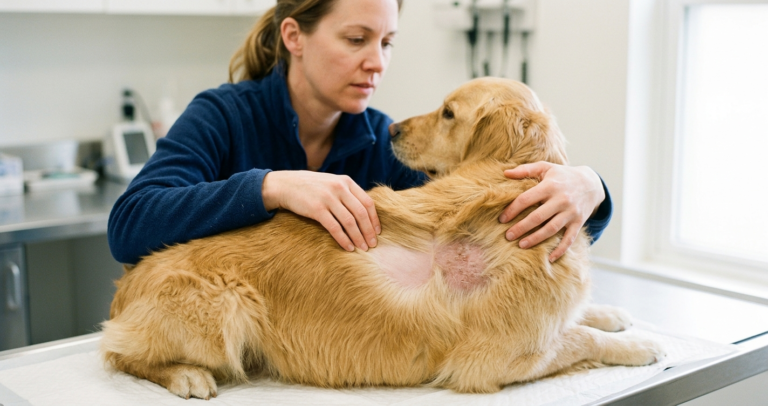
Abnormal shedding looks different. Circular patches, asymmetrical hair loss, bald spots on the tail or flanks, skin that looks red, flaky, or thickened – these are not seasonal.
Conditions like flea allergy dermatitis, hypothyroidism in dogs, and feline hyperthyroidism can all cause shedding that does not follow the seasonal calendar. If your pet is losing fur in unexpected places or at unexpected times, that conversation belongs with a vet – not a grooming guide.
How to Manage Shedding Season Without Going Crazy
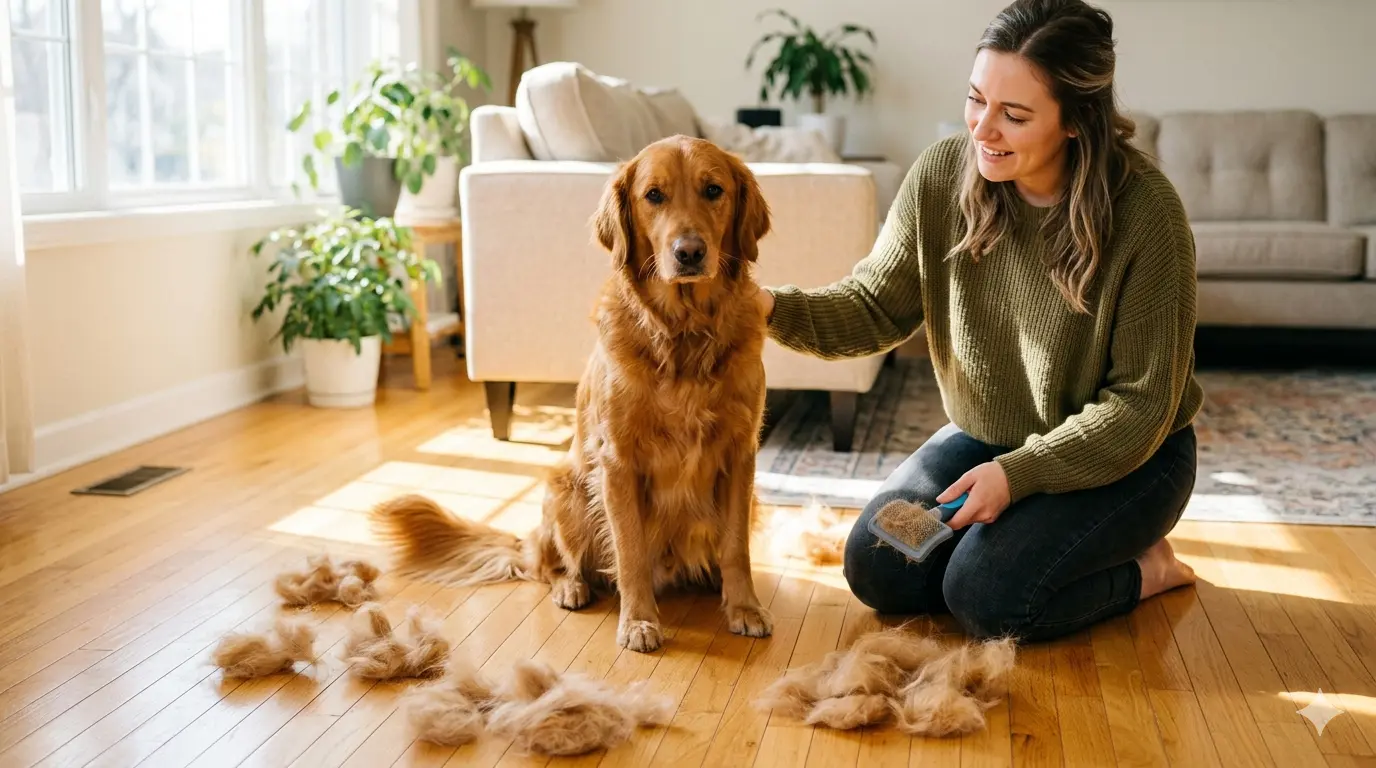
The single most effective thing you can do is brush more frequently before peak shedding hits – not after you are already buried in fur.
Most people react. The owners who keep their homes manageable are the ones who increase brush frequency in March, not in May when the couch is already covered.
Diet genuinely affects shedding volume. Omega-3 fatty acids – specifically EPA and DHA from fish oil – support skin and coat health in ways that show up visibly after six to eight weeks of consistent use. Our guide on the best foods to reduce pet shedding covers the specific nutrients that actually make a difference.
Bathing during peak shed is genuinely useful – a bath loosens dead undercoat and makes brushing significantly more effective afterward. Always brush after the bath, not before, and never brush a wet coat.
When DIY Grooming Is Not Enough
There are specific situations where home grooming during shedding season is not the right call.
A Husky or Malamute in full spring blow coat is genuinely a professional groomer job if you are not experienced with high-volume double coats. The fur volume is not the problem – the time and technique required to do it correctly is.
Severe matting that has developed during a heavy spring shed also needs professional handling. Trying to work through compacted mats at home, on a dog or cat that is already uncomfortable, often makes the situation worse. Our guide on how to safely remove mats from pet fur covers exactly where the line is between what you can handle at home and when to call a professional.
For a full breakdown of which grooming situations belong with a professional, our article on when to see a professional groomer vs doing it at home covers the decision clearly.
FAQ: Dog and Cat Shedding Season
When is dog shedding season?
The primary dog shedding season runs from March through May for most double-coated breeds. A secondary, lighter shed happens in September and October. Single-coated breeds like Boxers and Beagles shed at a consistent moderate level year-round with no dramatic seasonal peak.
When do cats shed the most?
Most cats shed heaviest in April and May, driven by increasing daylight hours after winter. Long-haired breeds like Persians and Himalayans shed heavily year-round regardless of season. Indoor cats often shed at a steady moderate level throughout the year because artificial lighting disrupts their seasonal signals.
How long does shedding season last for dogs?
The spring shed typically lasts 4 to 6 weeks for most double-coated breeds. Heavy shedders like Huskies and Malamutes can stay in active blow coat for 6 to 8 weeks. The fall shed is shorter – usually 3 to 5 weeks.
Why is my dog shedding so much in winter?
If your dog sheds heavily in winter, artificial indoor lighting is the most likely cause – it disrupts the photoperiod signal that normally slows shedding in low-daylight months. Heavy winter shedding that includes patchy loss or skin changes is worth a vet check.
Why is my cat shedding year-round?
Indoor cats shed year-round because constant artificial light prevents the seasonal daylight signal from slowing down the hair growth cycle. This is normal. It is not a health problem. A consistent brushing routine is the most practical response.
Does brushing during shedding season actually help?
Yes – significantly. Brushing removes loose fur before it falls on your furniture and reduces the amount your pet ingests during self-grooming. For cats, less ingested fur means fewer hairballs. Our article on why cats get hairballs and how to prevent them explains exactly why brushing frequency during peak shed directly affects hairball frequency.
What months are worst for pet hair in the house?
What months are worst for pet hair in the house? April and May are the worst months for most dog and cat owners with double-coated breeds. If you have a German Shepherd, there is no best month – but spring is its own category.
The Calendar My Neighbor Now Uses
She texted me last March. “Starting the daily brushing this week.” Her Husky’s spring shed came and went without the full household crisis of the year before.
The calendar does not change. What changes is whether you are ready for it.
Dog and cat shedding season follows daylight – not the weather forecast. Once you understand that, the whole year starts to make sense.