When to See a Professional Groomer vs DIY at Home
The first time I tried to clip the fur around my Persian’s hindquarters, she levitated sideways off the grooming table and took a curtain with her. Nobody was hurt. The curtain did not survive.
I finished the job badly. She looked uneven for six weeks. A professional groomer fixed it in twenty minutes and charged me less than I had spent on tools trying to do it myself.
Knowing when to see a professional groomer versus handling grooming at home is not about skill level alone. It is about reading your pet honestly and understanding which situations have a cost for getting wrong.
The Short Answer
You can handle most routine grooming at home – regular brushing, basic cleaning, nail trims if your pet tolerates it. You should see a professional groomer when the task requires restraint you cannot safely provide, tools you do not own, or experience with a coat condition that has moved past maintenance.
That line is different for every pet and every owner. What follows is how to find it.
What You Can Realistically Do at Home
Regular Brushing and Coat Maintenance
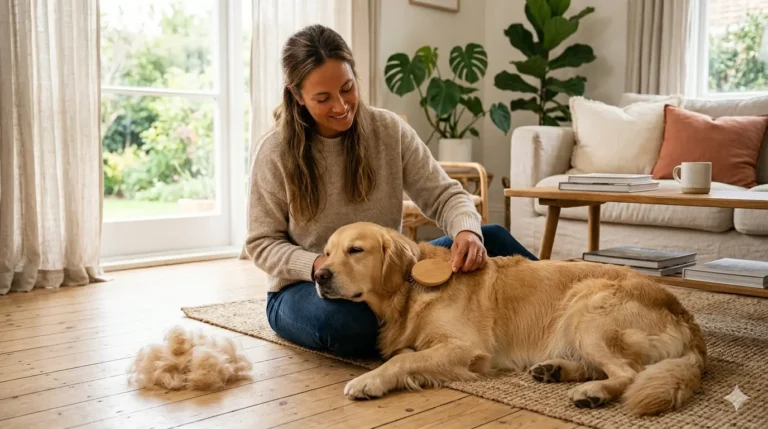
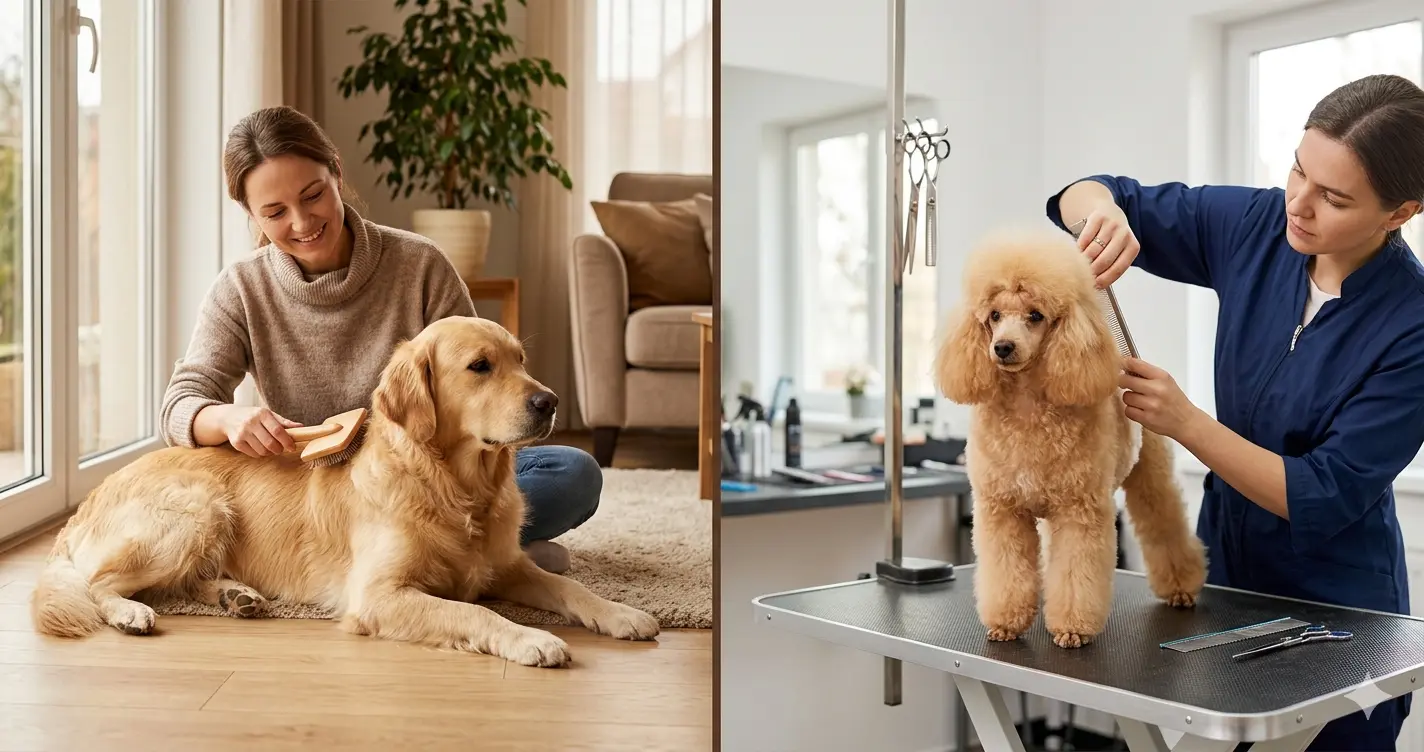
Brushing is the grooming task most owners can and should handle at home. It is low-risk, requires basic tools, and the more consistently you do it the easier it gets.
For short to medium coats in good condition, a simple routine works well. Start with a wide-tooth comb to check for any tangles, then use a finishing brush to remove loose fur and leave the coat smooth. The Purry Self-Cleaning Brush handles this final step efficiently – the one-button mechanism means you are not stopping every thirty seconds to pull fur out of the pins manually. It is a finishing tool for maintained coats, not a solution for neglected ones.
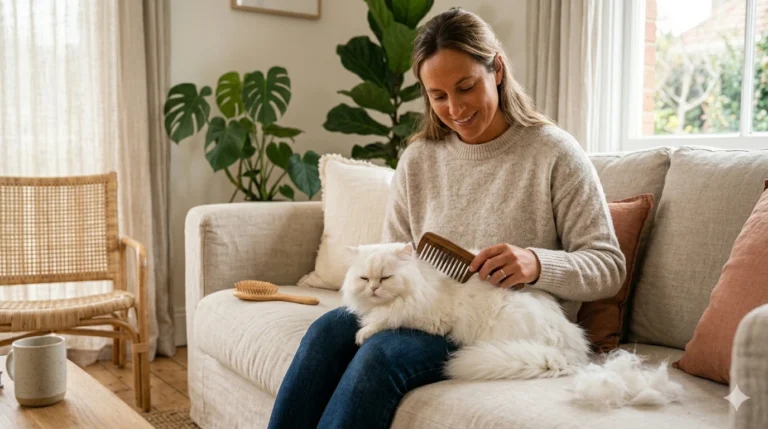
For long-haired cats and dogs, brushing frequency matters more than technique. Three to four times a week prevents the kind of matting that turns a home grooming session into a professional groomer’s problem. Our guide on long-haired cat grooming covers the full routine for breeds that need consistent attention.
Light Cleaning and Basic Upkeep
Eye discharge wiping, ear cleaning with a vet-approved solution, paw pad checks – these are all reasonable home tasks for most owners with cooperative pets.
Wiping a cat’s face daily is genuinely useful for flat-faced breeds like Persians and Himalayans where tear staining is a constant issue. It takes thirty seconds and prevents skin irritation that turns into a vet visit if ignored.
Nail Trims – With Conditions
Nail trims at home are achievable for calm pets with owners who have been shown the correct technique at least once.
The condition is that quick – the blood vessel inside the nail – is easy to cut accidentally if you are not certain where it is. On dark nails it is nearly invisible. One bad cut does not ruin anything permanently but it does make your pet significantly less cooperative for every future nail trim.
If your pet fights nail trims, a groomer or vet tech handles this faster and more safely than most owners can at home. It is not a reflection on you.
When to See a Professional Groomer
Matting That Has Gone Past Surface Level
This is the most common situation where owners wait too long before calling a professional.
Surface tangles – knots you can feel at the tips of the fur – are manageable at home with a dematting comb and patience. Mats that have tightened against the skin are a different problem entirely.
Pulling at a mat that is sitting against the skin causes pain and can tear the skin underneath. Cutting it out without knowing where the skin is underneath is how pets end up with accidental wounds. A professional groomer has the tools and technique to remove compacted mats safely – and will tell you honestly if a vet needs to see the skin underneath first.
If you are not sure whether a mat qualifies as surface-level or compacted, press it gently toward the skin. If it does not move at all and the skin moves with it, that is a professional groomer situation. Our article on how to safely remove mats from pet fur covers what you can tackle at home and where the line is.
Double-Coated Breeds During Blow Coat Season
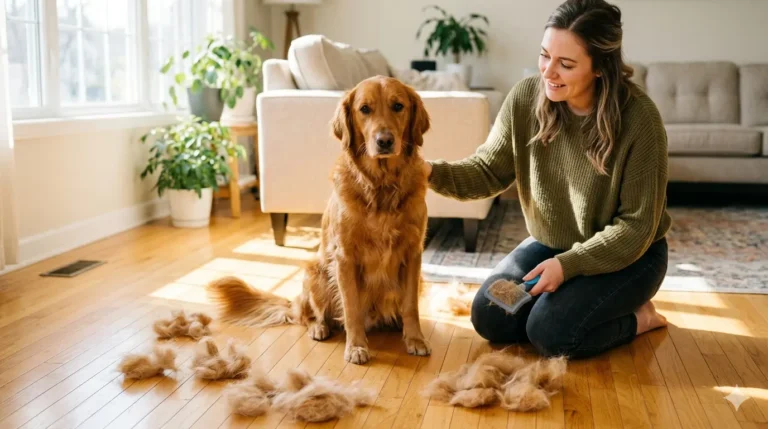
A Husky or Alaskan Malamute in full spring blow coat is a significant undertaking. The fur volume is not the problem – the time, technique, and equipment required to do it correctly without damaging the undercoat is.
Shaving a double-coated breed is one of the most common grooming mistakes owners make when they feel overwhelmed by spring shedding. It feels logical. It is not. Shaving removes the guard coat that regulates temperature and protects skin, and double coats do not always grow back correctly after being shaved. A professional groomer who understands double coats will use high-velocity dryers and appropriate deshedding tools to remove the loose undercoat without touching the guard coat.
If you have a heavily shedding double-coated dog and you are managing the blow coat yourself, our breakdown of dog and cat shedding season by month explains what to expect and when the worst of it typically passes.
Breed-Specific Haircuts
Poodle cuts, Bichon trims, Schnauzer patterns, Persian lion cuts – these require clipper skills, blade knowledge, and breed-specific technique that take professional groomers years to develop.
Attempting a breed-specific cut at home without that foundation usually produces a result that needs a professional to fix anyway. The economics rarely work out in favor of DIY for anything beyond basic tidying.
Pets With Anxiety or Aggression During Grooming
Some pets simply do not cooperate with home grooming – not because of anything wrong with the owner’s technique, but because the pet has anxiety around handling, restraint, or specific tools.
A professional groomer works with difficult pets regularly and has techniques for managing them that most owners have never encountered. Some groomers specialize specifically in anxious or reactive animals. If your pet’s stress level during grooming is high enough that you are both miserable by the end of it, that is a legitimate reason to hand it off.
For pets with severe grooming anxiety, a conversation with your vet before the appointment is worth having. In some cases sedation-assisted grooming at a veterinary clinic is the genuinely kind option.
Anal Gland Expression
This one belongs on the list because owners frequently ask about it.
Anal gland expression is something groomers and vet techs handle routinely. It is not something most owners should attempt at home – not because it is technically impossible, but because doing it incorrectly can cause more problems than it solves. If your dog is scooting or showing signs of anal gland discomfort, a groomer or vet is the right call.
The Honest Cost Comparison
A lot of owners start doing grooming at home to save money. That math works – sometimes.
| Task | DIY Cost | Professional Cost | Notes |
|---|---|---|---|
| Regular brushing | Tool investment only | N/A | Always DIY |
| Nail trim | Low – one-time tool cost | $10-20 per visit | DIY if pet is cooperative |
| Bath and blow dry | Low ongoing cost | $30-80 depending on breed | DIY works for most breeds |
| Deshedding treatment | Tool investment | $50-120 for large double-coated breeds | Professional worth it at peak shed |
| Mat removal – surface level | Low | N/A | DIY with correct tools |
| Mat removal – compacted | Do not attempt DIY | $50-150 depending on severity | Always professional |
| Breed-specific cut | High risk of poor result | $60-150 | Almost always professional |
| Full groom – double-coated large breed | Significant time and equipment | $80-150 | Professional usually better value |
The cases where DIY saves money reliably are routine brushing, basic cleaning, and nail trims on cooperative pets. Everything else requires an honest assessment of your pet’s coat condition, your skill level, and your pet’s temperament.
How to Find a Good Groomer
Not all groomers are equal. A bad grooming experience – especially for a young pet – creates lasting anxiety that makes every future grooming session harder.
Ask specifically whether the groomer has experience with your breed. For double-coated breeds, ask directly whether they use high-velocity dryers for deshedding or whether they clip. The answer tells you a lot.
Look for a groomer who will let you ask questions before booking and who gives you a clear answer about what the appointment will involve. Vague answers about process are a flag.
For cats specifically – not all groomers work with cats. Cat grooming requires different handling, different equipment, and a different environment. A groomer who does mostly dogs and occasionally takes cats is not the same as one who specializes in feline grooming.
A Note on Grooming Frequency
The owners who spend the least money at professional groomers are usually the ones who do the most consistent maintenance at home.
A coat that is brushed three times a week never develops the compacted matting that requires hours of professional work to undo. A pet that is handled regularly from a young age is dramatically easier to groom than one that is only touched during appointments.
The relationship between home maintenance and professional grooming is not either/or. The best approach is consistent home brushing with professional help for the tasks that genuinely require it. That combination keeps costs predictable and keeps your pet comfortable year-round.
For a practical look at what consistent home grooming actually looks like week to week, our guide on how to reduce pet shedding covers the full maintenance routine.
FAQ: When to See a Professional Groomer
How often should I take my dog to the groomer?
It depends entirely on breed and coat type. Short-haired single-coated dogs like Beagles and Boxers can go three to four months between professional appointments if home brushing is consistent. Double-coated breeds benefit from professional deshedding at peak shedding season – at minimum once in spring. Breeds requiring haircuts like Poodles and Schnauzers typically need a professional appointment every six to eight weeks.
Can I groom my cat at home?
Yes – for routine brushing, light cleaning, and basic maintenance. Cats with long dense coats like Persians need consistent home brushing to prevent matting between professional appointments. For mat removal beyond surface tangles, nail trims on uncooperative cats, or breed-specific cuts, a professional who specializes in cat grooming is the right call.
Is it okay to shave a double-coated dog in summer?
No. Shaving a double-coated breed removes the guard coat that regulates temperature and protects the skin. The coat does not always grow back correctly after shaving. A professional deshedding treatment removes the loose undercoat without touching the guard coat and is the correct approach for managing summer heat in these breeds.
How do I know if my pet’s mats need a professional?
Press the mat gently toward the skin. If it does not move and the skin moves with it, the mat is compacted against the skin and needs professional handling. Surface tangles that move freely can be worked through at home with a dematting comb and detangling spray.
What should I ask a groomer before booking?
Ask whether they have experience with your specific breed, what tools they use for deshedding if relevant, and how they handle anxious or reactive pets. For cats, confirm they groom cats regularly – not just occasionally. A groomer who answers these questions clearly and specifically is a good sign.
Is professional grooming worth the cost?
For routine brushing and basic maintenance – no, home grooming is sufficient. For blow coat management on large double-coated breeds, compacted mat removal, breed-specific cuts, or pets with grooming anxiety – yes, professional grooming is worth the cost and often prevents more expensive problems down the line.
What the Curtain Taught Me
The Persian survived my attempt. The curtain did not, as established.
What I learned was not that I am bad at grooming. I am decent at the maintenance work – brushing, basic cleaning, keeping the coat from getting out of hand. What I am not is a professional with the tools and technique to fix a situation I let go too long.
The twenty minutes and the reasonable fee were not a failure. They were the correct decision, made about three weeks later than they should have been.