How Much Water Should My Pet Drink Daily? The Complete Guide
Most pet owners focus on what their pet eats. What their pet drinks gets far less attention – and that is a problem, because dehydration in pets is more common than most people realize and its effects show up in ways that look like completely different issues.
How much water your pet should drink daily depends on their species, size, diet, activity level, and health status. The general guideline is that dogs need approximately 1 ounce of water per pound of body weight per day, and cats need approximately 3.5 to 4.5 ounces per kilogram of body weight per day. But those numbers are starting points, not rules – and understanding what affects them is what actually helps you keep your pet properly hydrated.
Why Hydration Matters More Than Most Owners Realize
Water is involved in almost every biological function your pet’s body performs.
It regulates body temperature. It transports nutrients to cells and removes waste products. It lubricates joints. It supports kidney function – the organ system most commonly affected by chronic dehydration in pets.
Dehydration does not just make pets thirsty. It makes their skin drier, their fur more brittle, and their shedding worse. It slows digestion and gut motility – which in cats directly increases hairball frequency because hair passes through the digestive tract more slowly. It puts strain on the kidneys over time in ways that accumulate silently for years before becoming a visible problem.
The coat is often the first place dehydration shows up visibly. A pet that is consistently mildly dehydrated produces drier, more brittle fur that breaks and sheds at a higher rate than a well-hydrated pet. If you are managing shedding through grooming and diet but not addressing hydration – you are missing one of the most effective levers available.
How Much Water Dogs Need Daily
The standard guideline for dogs is 1 ounce of water per pound of body weight per day.
| Dog Size | Weight | Daily Water Guideline |
|---|---|---|
| Toy breeds | 5-10 lbs | 5-10 oz – roughly 1 cup |
| Small breeds | 10-25 lbs | 10-25 oz – 1.5 to 3 cups |
| Medium breeds | 25-50 lbs | 25-50 oz – 3 to 6 cups |
| Large breeds | 50-80 lbs | 50-80 oz – 6 to 10 cups |
| Giant breeds | 80+ lbs | 80+ oz – 10+ cups |
These are baseline figures for a resting adult dog eating dry kibble in a temperate environment. Actual needs vary significantly based on:
Activity level – a dog that runs for an hour needs significantly more water than one that walks around the block. Active dogs can need two to three times the baseline amount on high-activity days.
Weather and temperature – dogs pant to regulate temperature. Hot weather increases water loss substantially. Dogs exercising in summer heat need access to water every 15 to 20 minutes.
Diet – dogs eating wet food get a significant portion of their daily water intake from food. A dog on exclusively wet food may drink noticeably less from their bowl and still be well-hydrated. This is normal.
Health status – dogs with kidney disease, diabetes, or Cushing’s disease often drink significantly more than the guideline. Increased thirst is a symptom worth tracking and reporting to your vet.
Pregnancy and nursing – nursing dogs need dramatically more water than the standard guideline to support milk production.
How Much Water Cats Need Daily
Cats are where hydration gets genuinely complicated.
The guideline for cats is approximately 3.5 to 4.5 ounces of water per kilogram of body weight per day. For an average 4kg – roughly 9 pound – cat, that is about 14 to 18 ounces total daily water intake.
The critical word is total. Water from food counts.
| Cat Weight | Daily Water Guideline | From Bowl if Eating Wet Food | From Bowl if Eating Dry Only |
|---|---|---|---|
| 3 kg – 6.5 lbs | 10-14 oz | 2-4 oz | 10-14 oz |
| 4 kg – 9 lbs | 14-18 oz | 3-5 oz | 14-18 oz |
| 5 kg – 11 lbs | 17-22 oz | 4-6 oz | 17-22 oz |
Cats evolved as desert animals. Their ancestors obtained most of their water from prey – which is roughly 70% water by composition. A cat’s thirst drive is naturally low because their bodies are designed to get hydration from food, not from standing water.
This is why cats eating exclusively dry kibble – which is typically only 10% water – are at a significant hydration disadvantage. They are designed to get water from food and their food contains almost none. Their thirst drive does not reliably compensate for this gap.
The result: a large percentage of cats eating only dry food are in a state of chronic mild dehydration. This contributes to urinary tract problems – especially in male cats – kidney disease over time, constipation, and the coat and shedding issues described above.
Signs Your Pet Is Not Drinking Enough
Mild dehydration does not look dramatic. That is what makes it easy to miss.
The Skin Tent Test
Gently pinch a small amount of skin at the back of your pet’s neck and release it. In a well-hydrated pet, the skin snaps back immediately. In a dehydrated pet, the skin returns to position slowly or holds a tent shape for a moment.
This test is a rough indicator – not a diagnostic tool. Skin elasticity varies with age and body condition. But it is a useful first check.
Signs of Dehydration in Dogs
- Dry or sticky gums instead of moist and slick
- Sunken eyes
- Lethargy and reduced energy
- Reduced skin elasticity on the skin tent test
- Dark yellow urine – well-hydrated dogs produce pale yellow to clear urine
- Dry nose – though a dry nose alone is not a reliable indicator
Signs of Dehydration in Cats
- Reduced litter box output – less urine than usual
- Constipation or straining to defecate
- Lethargy
- Dull, dry coat that is less well-groomed than usual
- Dry gums
- Reduced skin elasticity
Severe dehydration in any pet – sunken eyes, extreme lethargy, complete loss of skin elasticity – is a veterinary emergency. Mild chronic dehydration is what most owners need to address through management changes at home.
Signs Your Pet Is Drinking Too Much
Increased thirst – polydipsia – is as worth tracking as decreased thirst.
A dog or cat drinking significantly more than usual, filling and emptying their water bowl multiple times a day, or waking at night to drink is showing a symptom – not just being thirsty.
Conditions associated with increased thirst in pets include diabetes mellitus, chronic kidney disease, Cushing’s disease in dogs, hyperthyroidism in cats, pyometra in unspayed females, and certain medications including steroids.
If your pet’s water consumption has noticeably increased without an obvious environmental explanation like hot weather or increased exercise – mention it to your vet at the next visit or schedule an appointment sooner. A urine test and basic bloodwork can identify the most common causes quickly.
How to Get Your Pet to Drink More Water
For Dogs
Always keep fresh water available. This sounds obvious. It is the most important factor. Water that has been sitting for more than 24 hours is less appealing to most dogs – refresh it daily at minimum.
Use a clean bowl. Bowls develop bacterial biofilm faster than most owners realize. Wash food and water bowls daily. Stainless steel and ceramic bowls are easier to clean thoroughly than plastic, which scratches and harbors bacteria in the scratches.
Add water to dry kibble. Warm water poured over dry kibble and allowed to sit for a few minutes softens the food and increases moisture intake without changing the diet. Most dogs accept this readily.
Offer wet food regularly. Even one or two wet food meals per week significantly increases overall moisture intake.
Use multiple water stations. Some dogs drink more when water is available in multiple locations rather than a single bowl in one spot.
Try a pet water fountain. Moving water stays oxygenated and fresh longer than still water. Some dogs strongly prefer it.
For Cats
Pet water fountains make a significant difference for most cats.
Cats are attracted to moving water instinctively – in the wild, moving water is safer than stagnant water. Many cats that ignore a still water bowl will drink readily and frequently from a fountain. The Catit Flower Fountain and PetSafe Drinkwell are commonly recommended options that work well for most cats.
Place water away from food.
Cats have an instinct to keep their water source away from their food – in the wild, prey contaminated a water source. Many cats drink significantly more when their water bowl is in a different location from their food bowl.
Add wet food to the diet.
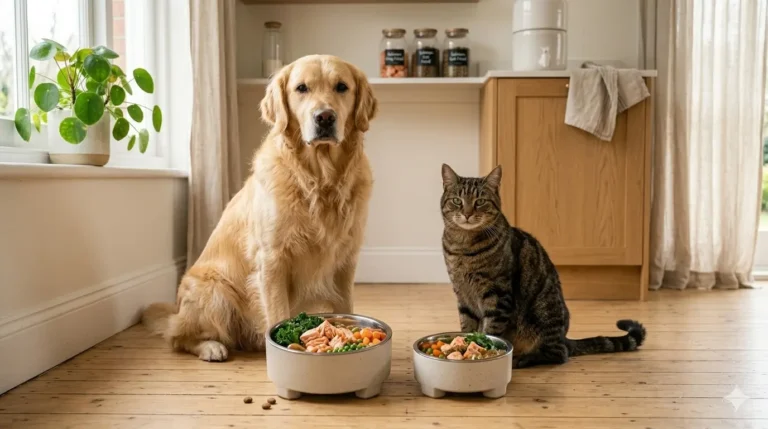
This is the single most effective intervention for improving cat hydration. Wet food is approximately 70 to 80% water. Switching from exclusively dry food to a mixed diet – even just one wet meal per day – substantially increases daily water intake without requiring the cat to drink more from a bowl.
Try different bowl materials and depths.
Some cats dislike deep bowls because their whiskers touch the sides – whisker fatigue is a real phenomenon that causes cats to avoid certain bowls. Wide, shallow dishes often improve drinking behavior in sensitive cats.
Add a small amount of low-sodium broth to water.
Chicken or fish broth – no onion, no garlic, no added salt – makes water more appealing to many cats. A teaspoon in a fresh bowl of water is enough.
Diet and Hydration – How They Connect
The relationship between what your pet eats and how hydrated they are is direct and significant.
A pet eating exclusively dry food relies entirely on their drinking behavior for hydration. A pet eating wet food or a mixed diet gets a substantial portion of their daily water needs from food itself.
For coat health specifically – the connection between hydration and shedding is real. Dehydrated skin produces more brittle fur. More brittle fur breaks more easily and sheds at a higher rate. Our article on the best foods to reduce pet shedding covers how diet and hydration work together to change coat quality from the inside out.
For cats and hairballs – hydration directly affects gut motility. A well-hydrated cat moves ingested fur through the digestive tract faster, reducing the amount that accumulates into hairballs. Our guide on why cats get hairballs and how to prevent them covers this connection in detail.
Puppies, Kittens, and Senior Pets – Special Considerations
Puppies
Puppies need more water relative to their body weight than adult dogs. A general guideline is half a cup of water every two hours for young puppies. As they grow, needs increase with body weight.
Monitor puppy water intake carefully. Puppies dehydrate faster than adult dogs and recover more slowly. A puppy that is not drinking, has sunken eyes, or seems lethargic needs veterinary attention promptly.
Kittens
Kittens eating wet food get most of their hydration from food. Kittens eating dry food need consistent access to fresh water. Monitor litter box output as the most reliable indicator of adequate hydration – a kitten that is not urinating regularly is not getting enough fluid.
Senior Pets
Senior pets have reduced kidney function compared to younger animals. Adequate hydration is more important – not less – as pets age.
Senior cats are at high risk of chronic kidney disease. Increased water intake through wet food and fountains is one of the most effective ways to support kidney health in aging cats. If your senior cat is drinking noticeably more than usual, schedule a vet visit – it is one of the first signs of kidney disease and hyperthyroidism, both of which are far more manageable when caught early. Our guide on when to take your pet to the vet covers the specific symptoms in older cats that warrant prompt veterinary attention.
FAQ: How Much Water Should My Pet Drink
How much water should a dog drink per day?
The general guideline is 1 ounce per pound of body weight daily. A 30-pound dog needs roughly 30 ounces – about 4 cups – under normal conditions. Active dogs, dogs in hot weather, and nursing dogs need significantly more.
How much water should a cat drink per day?
Approximately 3.5 to 4.5 ounces per kilogram of body weight daily – total water including food moisture. An average 4kg cat needs roughly 14 to 18 ounces total. Cats eating wet food get most of this from food and may drink very little from a bowl while still being well-hydrated.
My cat never drinks from the water bowl. Should I be worried?
Not necessarily – if your cat eats wet food, they may be getting adequate hydration from their diet. If your cat eats exclusively dry food and rarely drinks, that is worth addressing. Try a water fountain, add wet food to the diet, or move the water bowl away from the food bowl.
What color should my pet’s urine be?
Pale yellow to clear in a well-hydrated pet. Dark yellow or amber indicates dehydration. Completely colorless urine in large amounts can indicate excessive water intake – worth mentioning to your vet. Blood in urine is always a veterinary situation.
Can a pet drink too much water?
Yes – and significantly increased water intake is a symptom worth reporting to your vet. It can indicate diabetes, kidney disease, Cushing’s disease, or other conditions. The occasional very thirsty day after exercise or in hot weather is normal. Consistently elevated water intake is not.
Does wet food count toward my pet’s daily water intake?
Yes – completely. Wet food is approximately 70 to 80% water. A cat eating exclusively wet food may meet most of their daily water needs through food alone and drink very little from a bowl. This is normal and healthy.
How do I know if my pet is dehydrated?
The skin tent test – pinch the skin at the back of the neck and release. Skin that returns slowly indicates dehydration. Dry or sticky gums, dark urine, lethargy, and reduced litter box output are additional indicators. Severe dehydration needs immediate veterinary attention.
Conclusion
Water is not a minor detail in your pet’s health. It is the foundation that everything else depends on.
For dogs – fresh water always available, topped up daily, bowl washed regularly. Increase access during hot weather and after exercise. Add wet food or water to kibble if your dog is a reluctant drinker.
For cats – a water fountain is the single most effective investment most cat owners can make. Add wet food to the diet. Move the water bowl away from the food. These three changes alone dramatically improve hydration in most cats.
Monitor what goes in and what comes out. Urine color and litter box frequency are the most reliable daily indicators of adequate hydration. When something changes significantly in either direction – that is information worth paying attention to and discussing with your vet.
A well-hydrated pet has a better coat, better digestion, better kidney health, and better overall condition than a chronically mildly dehydrated one. It is one of the simplest and most impactful things you can manage at home.