How to Reduce Pet Shedding – The Real Guide for Dog and Cat Owners
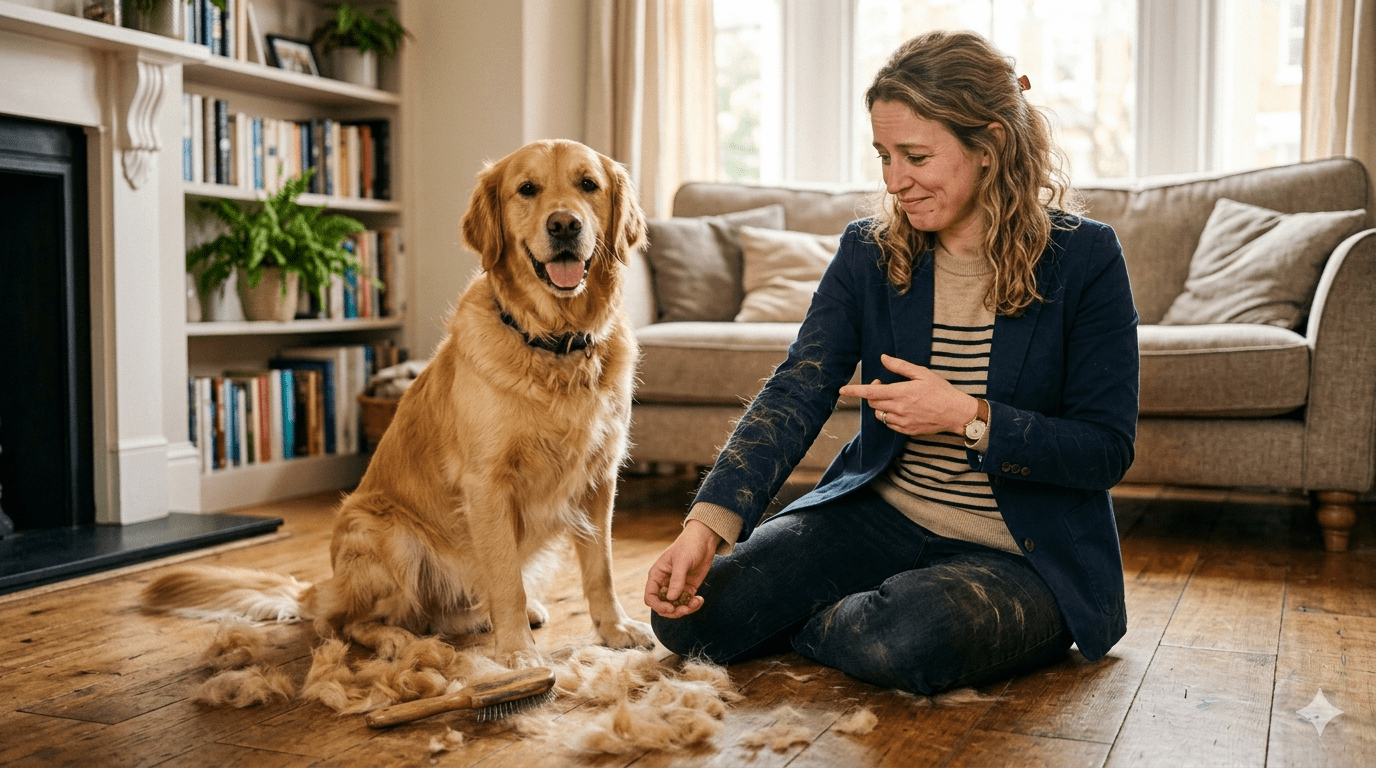
The morning I wore a black blazer to an important meeting, I did not notice the golden retriever fur until I sat down. Biscuit had leaned against me for exactly four seconds while I grabbed my keys. One shoulder. A full coat’s worth of fur.
That was the moment I stopped pretending I had shedding under control and actually started learning how to manage it.
If you are here, you have probably had your own version of that moment. Maybe it was finding fur in your coffee. Maybe it was realizing your couch has changed color. Maybe it was sneezing for the third straight hour in your own home.
This guide covers why pets shed, what actually helps, what makes it worse, and when shedding stops being normal and becomes a reason to call your vet. No gimmicks. No miracle products. Just what actually works.
Why Your Pet Sheds So Much
Before you can figure out how to reduce pet shedding, it helps to understand what is actually happening under that fur.
Most people think of a pet’s coat as one thing. It is not.
Dogs and cats with medium to long coats – and even some short-haired breeds – have two layers working at the same time. The outer coat, also called the topcoat or guard coat, is what you see and touch. Underneath sits the undercoat – a soft, dense, insulating layer that keeps your pet warm in cold weather and helps regulate temperature in heat.
When seasons change – particularly as days get longer in spring and shorter in fall – your pet’s body gets a biological signal. That undercoat, no longer needed at the same thickness, starts releasing. All at once. In impressive volume.
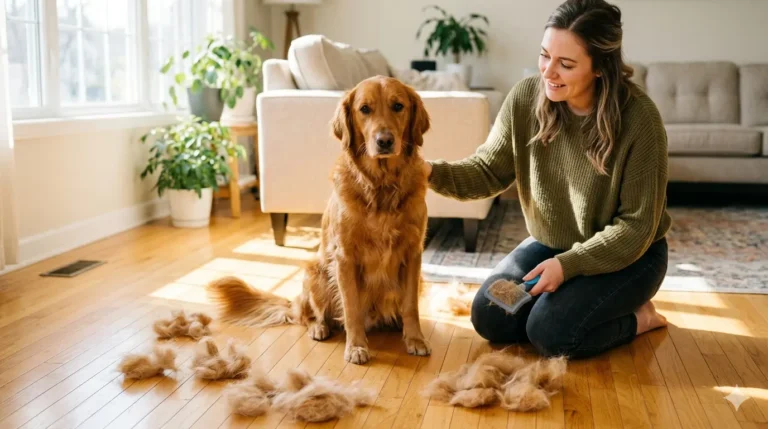
This is called blowing coat. If you have ever owned a Husky, Golden Retriever, German Shepherd, or Labrador during a seasonal shed, you know exactly what that looks like. Clumps. Tufts. Drifting piles of fur in corners you just vacuumed.
Cats go through the same process. Indoor cats shed more consistently year-round because artificial lighting and stable temperatures disrupt their natural coat cycle. That is why some indoor cats seem to shed constantly with no obvious peak season.
Shedding is not a problem. It is biology. You cannot stop it. You can only manage how much of it ends up on your furniture.
Which Pets Shed the Most
Not all pets shed equally. Knowing where your pet falls on the spectrum helps you set realistic expectations.
| Shed Level | Dogs | Cats |
|---|---|---|
| Heavy | Husky, Malamute, Golden Retriever, German Shepherd, Labrador, Border Collie, Bernese Mountain Dog, Corgi | Maine Coon, Norwegian Forest Cat, Ragdoll, Persian, Siberian |
| Moderate | Boxer, Beagle, Dalmatian, Cocker Spaniel | American Shorthair, Bengal, Russian Blue |
| Light | Poodle, Bichon Frise, Maltese, Schnauzer, Basenji | Sphynx, Devon Rex, Siamese |
One important note: hypoallergenic and non-shedding are mostly marketing language. All dogs and cats shed something, even if it is minimal. What varies is quantity and how visible or allergenic that fur and dander is.
The Seasonal Shedding Calendar
Understanding when your pet sheds most heavily helps you prepare instead of react.
| Season | What Is Happening | What to Do |
|---|---|---|
| Late Winter – Spring | Biggest shed of the year. Winter undercoat releases. | Increase brushing frequency. Switch to a deshedding tool. |
| Summer | Light, ongoing shedding. Coat adjusts to heat. | Maintain regular grooming. Focus on hydration and diet. |
| Late Summer – Fall | Secondary shed as summer coat releases. | Step up brushing sessions. |
| Winter | Minimal shedding for most pets. | Maintain routine. Watch for dry skin from indoor heating. |
Indoor cats and dogs in climate-controlled homes may not follow this calendar predictably. For a full breakdown of what to expect month by month, our guide on dog and cat shedding season by month covers every breed’s peak periods in detail.
The Grooming Mistake Almost Everyone Makes
Here is what typically happens when shedding gets out of hand.
The fur pile builds up. Frustration builds up. Someone Googles best deshedding brush, finds something with hundreds of reviews and aggressive metal tines, and orders it immediately. Then they brush their dog once, aggressively, for forty-five minutes straight, trying to get all the loose fur out in one session.
The dog disappears under the bed and does not come out.
Aggressive metal deshedding tools can scrape against sensitive skin, especially when used with too much pressure on a pet that is not used to being brushed. The pet associates grooming with discomfort, starts avoiding it, and the whole routine breaks down.
Grooming should feel like a massage, not a battle.
Short, calm sessions – ten to fifteen minutes, a few times a week – work dramatically better than one long exhausting session once a month. Pets stay relaxed. You remove more fur overall because you are doing it consistently.
Choosing the Right Brush
Different coats need different tools. Using the wrong one is less effective and uncomfortable for your pet.
| Coat Type | Best Tool | Why It Works |
|---|---|---|
| Short smooth coats – Beagle, Boxer | Rubber curry brush or grooming mitt | Pulls loose fur without irritating skin |
| Medium double coats – Lab, Golden | Slicker brush + undercoat rake | Reaches both coat layers |
| Heavy double coats – Husky, Malamute | Deshedding brush with rounded pins | Removes undercoat volume without skin damage |
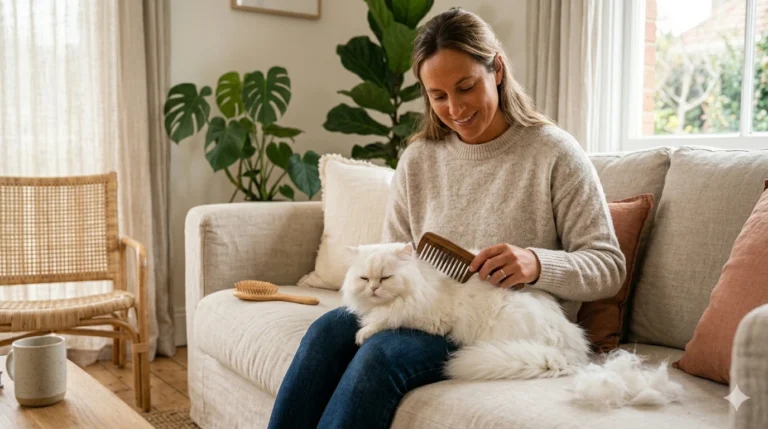
| Long coats – Maine Coon, Persian | Wide-tooth comb + slicker brush | Detangles before bristles can snag |
| Short-haired cats | Soft bristle brush or grooming glove | Gentle enough for frequent use |
The key phrase in all of this: rounded tips. Whatever brush you choose, the pins or bristles should have rounded ends that glide through fur rather than scratch against skin.
The Purry Self-Cleaning Brush was designed with this in mind – rounded stainless steel pins that work through fur without skin-scraping, and a one-button mechanism that lifts fur off in one piece. It is a finishing brush for maintained coats, not a dematting tool. If your pet has tangles, work through those with a wide-tooth comb first.
How to Groom Dogs vs Cats
One of the most common mistakes is treating dog and cat grooming as interchangeable. They are not.
Grooming Dogs to Reduce Shedding
Brush two to four times per week during shedding season, once or twice a week during quieter periods. Always brush in the direction of hair growth – going against it is uncomfortable and less effective.
Use short, gentle strokes rather than long forceful ones. You remove more fur this way because you are not just flattening it. Bathe during heavy shedding periods – a bath loosens dead fur and makes brushing afterward much more efficient.
For long-haired dogs, focus extra attention on areas that mat easily – behind the ears, under the armpits, around the collar, and at the base of the tail.
Grooming Cats to Reduce Shedding
Cats groom themselves constantly, which sounds helpful until you realize they are swallowing significant amounts of loose fur every day. That is where hairballs come from – and why brushing your cat matters just as much as brushing your dog.
Short-haired cats need two to three brushing sessions per week. Long-haired cats need daily brushing during shedding season, every other day otherwise. Focus extra attention on the belly, behind the ears, and under the legs – these areas mat first.
Regular brushing also directly reduces hairball frequency. Our guide on why cats get hairballs and how to prevent them explains the connection and covers what actually works beyond just brushing.
Mats Are More Serious Than They Look
A small tangle seems harmless. Mats do not stay small.
As they tighten, mats trap moisture, dirt, oils, and bacteria directly against the skin. They pull on skin every time your pet moves. What starts as a minor knot can become a painful, infected mess surprisingly fast – especially in long-haired cats that hide their discomfort well.
How to handle mats safely at home: never pull directly on a mat – hold the fur close to the skin with your fingers first. Apply detangling spray or a small amount of coconut oil and let it sit. Start at the outer edges, not the center. Use a wide-tooth comb or a dematting comb designed specifically for this.
If the mat is close to the skin, covers a large area, or feels like a solid mass – do not attempt to cut or remove it at home. Our article on how to safely remove mats from pet fur covers exactly where the line is between what you can handle yourself and when to call a professional.
Nutrition: The Part Nobody Talks About Enough
Grooming manages the fur that is already loose. Good nutrition changes how much fur becomes loose in the first place.
A pet with poor diet or inadequate hydration almost always has a coat that shows it – dull, dry, brittle fur that sheds heavily. Improving what your pet eats genuinely improves the coat over time.
Look for high-quality protein as the first ingredient – not meat meal or filler grains. Omega-3 and omega-6 fatty acids are the biggest factors in skin hydration and coat quality. Zinc and B vitamins support healthy skin cell turnover.
Fish oil is widely used and generally safe. It can noticeably improve coat texture within a few weeks of consistent use. Our guide on the best foods to reduce pet shedding covers which specific nutrients actually move the needle.
Hydration matters more than most people realize. Dehydrated pets have drier skin. Drier skin sheds more. If your pet eats primarily dry kibble, adding wet food a few times per week or a cat water fountain to encourage more drinking makes a real difference.
Protecting Your Furniture and Home
Throw blankets placed strategically on your pet’s favorite spots are your best tool here – washable, cheap, and they actually work. Microfiber and leather upholstery are far easier to remove pet hair from than velvet or woven fabrics.
A slightly damp rubber glove dragged across upholstery pulls pet hair off better than most lint rollers. The same glove works on clothes.
Vacuum at least twice a week during shedding season. A rubber-bristle broom on hard floors picks up fur that vacuums miss at the edges. HEPA air purifiers genuinely help with floating dander and fine fur particles.
Change HVAC filters more frequently during shedding season. A clogged filter recirculates pet hair through your whole house.
When Shedding Is Not Normal
Regular shedding is predictable. It follows a pattern. It responds to grooming. The fur comes out in normal amounts across the whole coat.
Abnormal shedding looks different. Watch for bald patches or thinning in specific spots – healthy shedding is distributed, patchy hair loss is a symptom. Red, irritated, or flaky skin underneath the fur is inflammation, not normal shedding. Constant scratching, licking, or biting at the same area points to allergies, fleas, or a skin infection.
A sudden increase in shedding with no seasonal explanation – or a dull, brittle coat that was not like that before – can indicate thyroid issues, nutritional deficiency, or other internal problems.
None of these are things to wait out. Our article on warning signs every owner should know covers the specific patterns that separate seasonal shedding from something that needs a vet.
Building a Grooming Routine That Actually Sticks
The secret to managing shedding long-term is not finding one perfect tool. It is consistency.
Ten calm minutes, three or four times a week, beats a two-hour marathon session once a month every single time. Your pet stays relaxed. Their coat stays in better condition. You are not dreading a massive grooming event that neither of you enjoys.
A simple framework that works:
Daily – two minutes. Quick visual check. Any mats forming? Any new scratching behavior? Anything look off?
Three to four times per week. Short brushing session with an appropriate tool. Positive reinforcement – treats, praise, whatever your pet responds to.
Monthly. Full bath and thorough brushing session. Check ears, trim nails or schedule with a groomer, inspect skin underneath the coat.
Seasonally – spring and fall. Step up brushing frequency significantly during peak shedding. Consider a professional grooming appointment for heavy shedders during coat-blowing season. Our guide on when to see a professional groomer vs doing it at home covers exactly which situations call for which approach.
FAQ: How to Reduce Pet Shedding
How often should I brush my dog to reduce shedding?
For most double-coated breeds, three to four times per week during shedding season and once or twice weekly otherwise. Short-haired breeds can manage once or twice a week year-round.
Does bathing a dog reduce shedding?
Yes – a proper bath with a quality shampoo loosens dead fur and makes brushing afterward far more effective. During heavy shedding, monthly baths make a noticeable difference. Once every four to six weeks is usually appropriate unless your dog gets into something.
Why is my indoor cat shedding so much?
Indoor cats often shed year-round because stable temperatures and artificial lighting disrupt their natural seasonal coat cycle. Regular brushing, good nutrition, and hydration all help manage this.
Is there a food that reduces pet shedding?
Not a single miracle food – but diets high in quality protein and omega-3 fatty acids consistently produce healthier coats that shed less excessively. Fish oil supplements can help – check with your vet for the right amount.
When should I be worried about my pet’s shedding?
If you notice bald patches, irritated or red skin, excessive scratching, or a sudden unexplained increase in hair loss – see your vet. Normal shedding is predictable and distributed across the whole coat.
Do deshedding brushes actually work?
Yes, when used correctly and with the right brush for your pet’s coat type. The key is rounded tips, gentle technique, and consistency – not the most aggressive tool you can find.
The Bottom Line
Learning how to reduce pet shedding is not really about stopping something natural. It is about working with your pet’s biology instead of against it.
Regular grooming with the right tools, a diet that actually supports coat health, staying alert to signs that something is wrong – these are not complicated things. But they do require showing up consistently.
Your pet’s coat is one of the best indicators of their overall health. When it looks good, it usually means they feel good. When something is off, the coat is often the first place it shows.
Start with one change this week. Add a brushing session. Swap out a brush that is not working. Look at the ingredient list on the food bag. Small habits, done consistently, make a real difference.
And maybe – just maybe – you will be able to wear a black blazer again without planning your exit strategy around it.